

 View Product ↗
01
Product Description
Technical details, material information and manufacturing notes for this product.
Titanium Flanges Overview
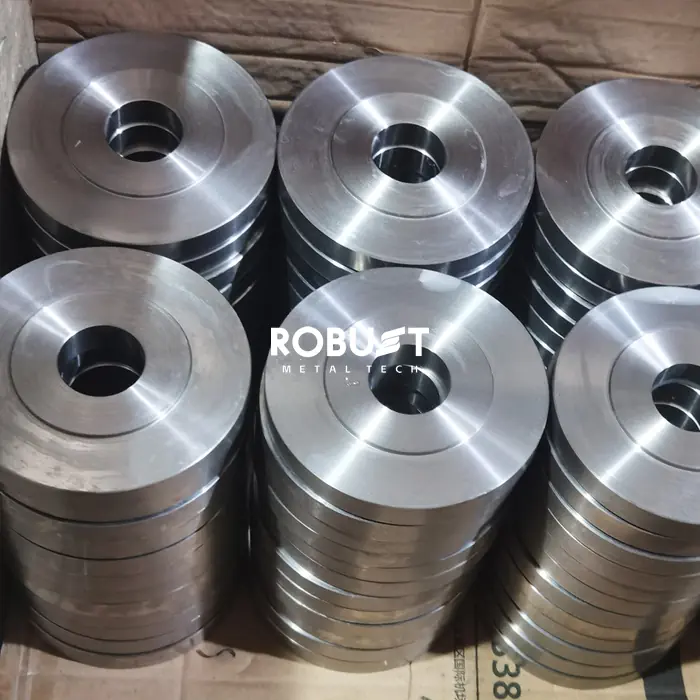
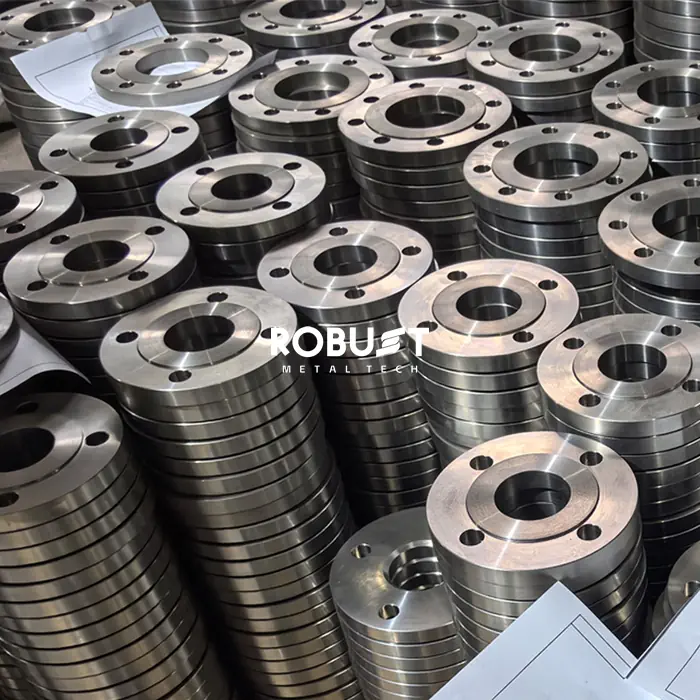
Titanium flanges are critical connection components used in piping systems.
They connect pipes, valves, pumps, and other industrial equipment in high-performance environments.
Unlike standard steel flanges, titanium flanges are designed for corrosion resistance and weight reduction.
They are widely used in chemical processing, marine engineering, oil and gas, and power industries.
A titanium flange acts as a sealing interface between two pipe sections.
It uses bolts and a gasket to create a strong, airtight, and leak-proof connection.
Common Types of Flanges
Titanium flanges are manufactured in several standard configurations depending on how they attach to the pipe.
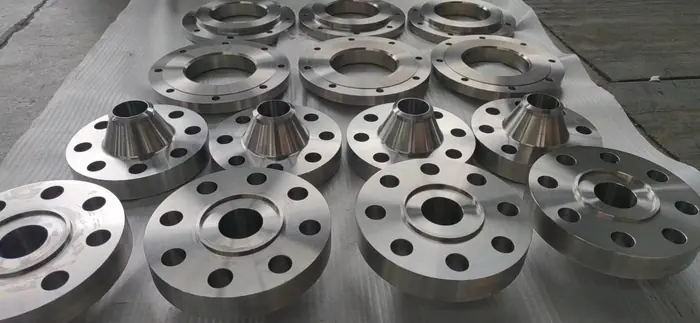
Slip-On (SO): Slipped over the end of the pipe and welded both inside and out. It is easy to align and cost-effective.
Weld Neck (WN): Features a long tapered hub that is butt-welded to the pipe. This is the gold standard for high-pressure or extreme-temperature systems.
Blind (BL): A solid disk used to seal off the end of a piping system or an opening.
Lap Joint (LJ): Used with a stub end. This allows the flange to rotate for easy bolt hole alignment, which is very useful in large-scale installations.
Threaded (TH): Screwed onto the pipe and used primarily in low-pressure applications where welding is not ideal.
1. Common Grades & Standards
Titanium flanges are manufactured to strict global standards to ensure compatibility with piping systems worldwide.
| Grade | Type | Primary Benefit | Common Standard |
| Grade 2 | CP (Pure) | Best balance of strength and corrosion resistance | ASME B16.5 / ASTM B381 |
| Grade 5 | Ti-6Al-4V | Highest mechanical strength | Aerospace / Defense |
| Grade 7 | Ti-0.2Pd | Best for extreme low-pH acids | Chemical Processing |
| Grade 12 | Ti-Mo-Ni | Enhanced crevice corrosion resistance | High-temp Brine |
2. Common Flange Types & Designs
| Flange Type | Description | Best Use Case |
| Weld Neck (WN) | Features a long tapered hub | High-pressure, critical systems |
| Slip-On (SO) | Slides over the pipe and is welded | Low-pressure, easy alignment |
| Blind (BL) | A solid disc used to seal a pipe end | Inspection ports or system ends |
| Lap Joint (LJ) | Used with a stub end | Systems requiring frequent cleaning |
| Threaded (TH) | Screws onto the pipe without welding | Small diameter, explosive zones |
3. Dimensions & Pressure Classes
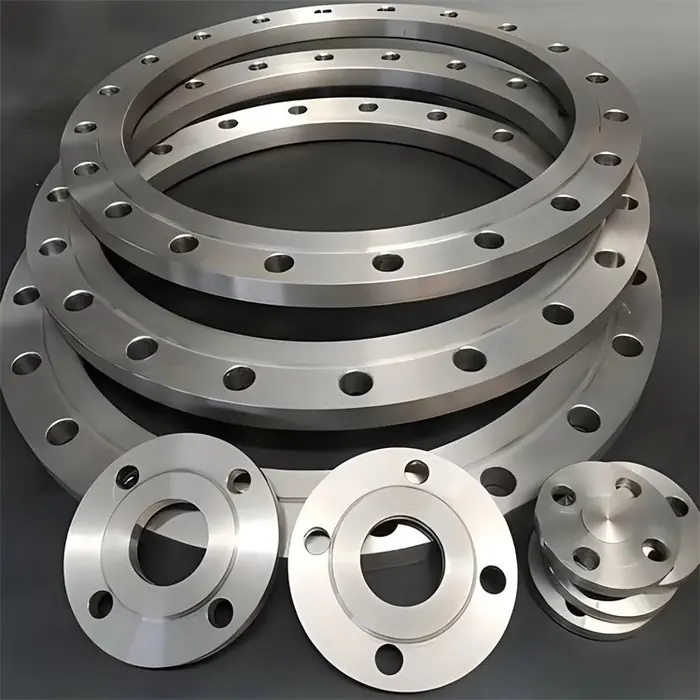
Titanium flanges follow the same dimensional classes as carbon and stainless steel for full interchangeability.
Standard Sizes: 1/2" (DN15) to 24" (DN600) and larger.
Pressure Ratings:
Class 150: Standard industrial use.
Class 300: Mid-pressure chemical lines.
Class 600 to 2500: Heavy-duty oil/gas and subsea applications.
Sealing Faces: Flat Face (FF), Raised Face (RF), or Ring Type Joint (RTJ) for ultra-high pressure.
04
Related Technical Resources
Material guides, application notes and manufacturing knowledge from ROBUST.
05