Hit enter to search or ESC to close

  • Cemented Carbide Rod Supplier | Tungsten Carbide Rods for CNC Cutting Tools and Industrial Use-1-ROBUST
  • Cemented Carbide Rod Supplier | Tungsten Carbide Rods for CNC Cutting Tools and Industrial Use-2-ROBUST
  • Cemented Carbide Rod Supplier | Tungsten Carbide Rods for CNC Cutting Tools and Industrial Use-3-ROBUST
  • Cemented Carbide Rod Supplier | Tungsten Carbide Rods for CNC Cutting Tools and Industrial Use-4-ROBUST
  • Cemented Carbide Rod Supplier | Tungsten Carbide Rods for CNC Cutting Tools and Industrial Use-5-ROBUST
  • Cemented Carbide Rod Supplier | Tungsten Carbide Rods for CNC Cutting Tools and Industrial Use-6-ROBUST
Cemented Carbide Rod Supplier | Tungsten Carbide Rods for CNC Cutting Tools and Industrial Use-1-ROBUSTCemented Carbide Rod Supplier | Tungsten Carbide Rods for CNC Cutting Tools and Industrial Use-2-ROBUSTCemented Carbide Rod Supplier | Tungsten Carbide Rods for CNC Cutting Tools and Industrial Use-3-ROBUSTCemented Carbide Rod Supplier | Tungsten Carbide Rods for CNC Cutting Tools and Industrial Use-4-ROBUSTCemented Carbide Rod Supplier | Tungsten Carbide Rods for CNC Cutting Tools and Industrial Use-5-ROBUSTCemented Carbide Rod Supplier | Tungsten Carbide Rods for CNC Cutting Tools and Industrial Use-6-ROBUST

Cemented Carbide Rod Supplier | Tungsten Carbide Rods for CNC Cutting Tools and Industrial Use

5out of5 based on12 reviews | Write a review
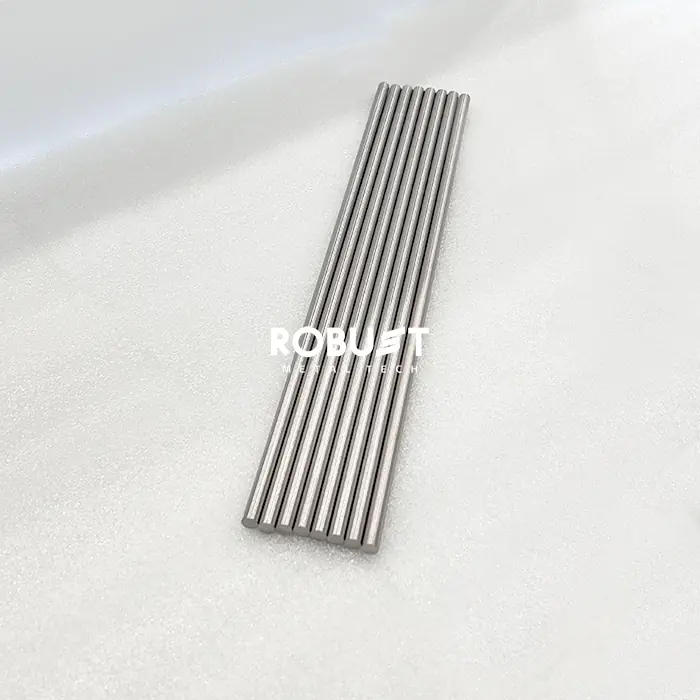
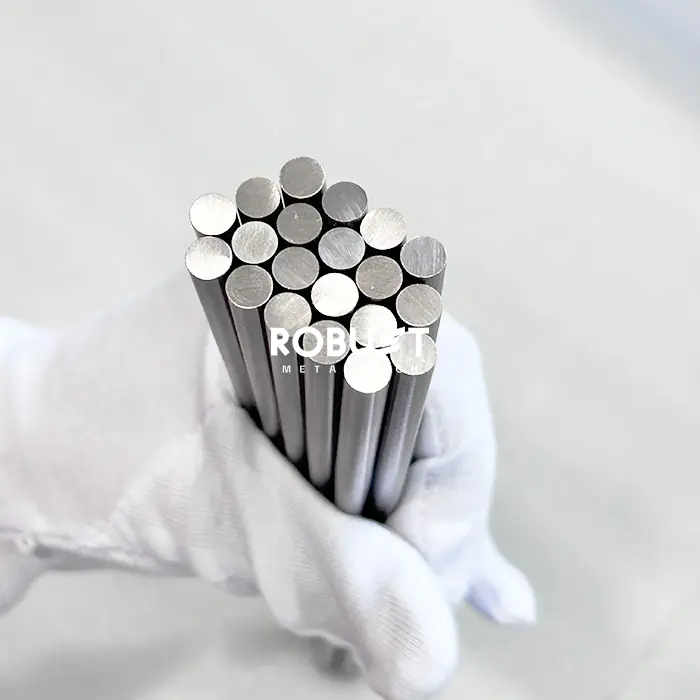
  • Cemented carbide rods are high-performance blanks used for manufacturing cutting tools such as drills, end mills, and reamers.

    They are made from tungsten carbide and cobalt binder, offering excellent hardness, wear resistance, and thermal stability.

    These rods are widely used in CNC machining, precision tooling, aerospace, and industrial manufacturing applications.

Description

1. Cemented Carbide Rod Overview

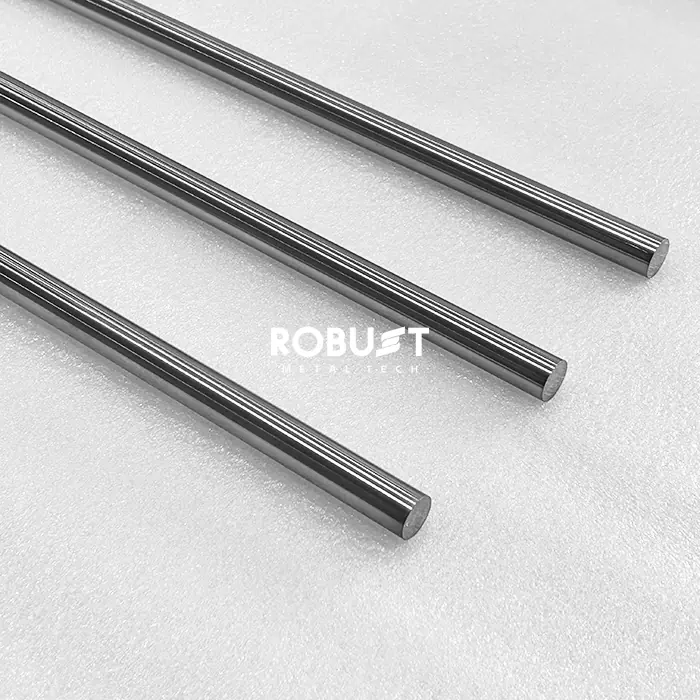
Cemented carbide rod is a solid cylindrical material made from tungsten carbide powder and metallic binder.

It is the basic raw material for high-performance cutting tools used in metalworking industries.

Compared with high-speed steel, carbide rods provide higher cutting speed and longer tool life.

Main Material Characteristics

High hardness and excellent wear resistance ensure stable performance in high-speed machining.

Good thermal resistance allows cutting under high-temperature conditions.

High rigidity reduces tool deformation during deep cutting operations.

2. Rod Types and Configurations

Solid Carbide Rods

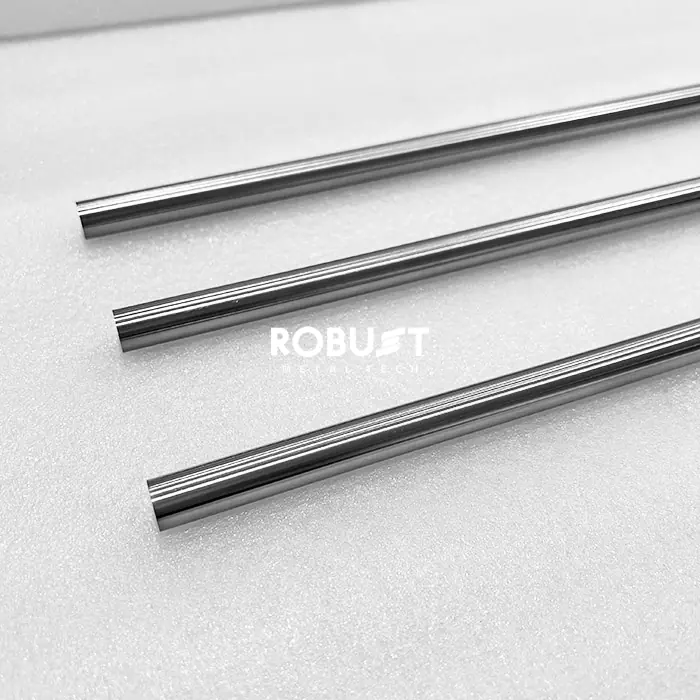
Solid rods are used for standard milling cutters and punching tools.

They provide stable structure and high strength for general machining applications.

Coolant Hole Rods

Single, double, or helical coolant holes are designed for internal cooling tool systems.

These structures improve chip removal and reduce cutting temperature during deep hole machining.

3. Performance Advantages

High Rigidity and Stability

Cemented carbide rods have much higher stiffness than steel materials.

This reduces vibration and improves machining accuracy.

Wear Resistance and Tool Life

Tools made from carbide rods maintain sharp edges for a long time.

This reduces tool change frequency and production cost.

Precision Machining Performance

High density material structure ensures smooth cutting and stable surface finish.

4. Technical Specifications

ItemSpecification
Diameter Range0.3 mm – 50 mm
Standard Length310 mm – 330 mm
Surface FinishGround (h6/h5), unground (black)
End TreatmentSingle or double chamfered ends

5. Surface and Precision Grades

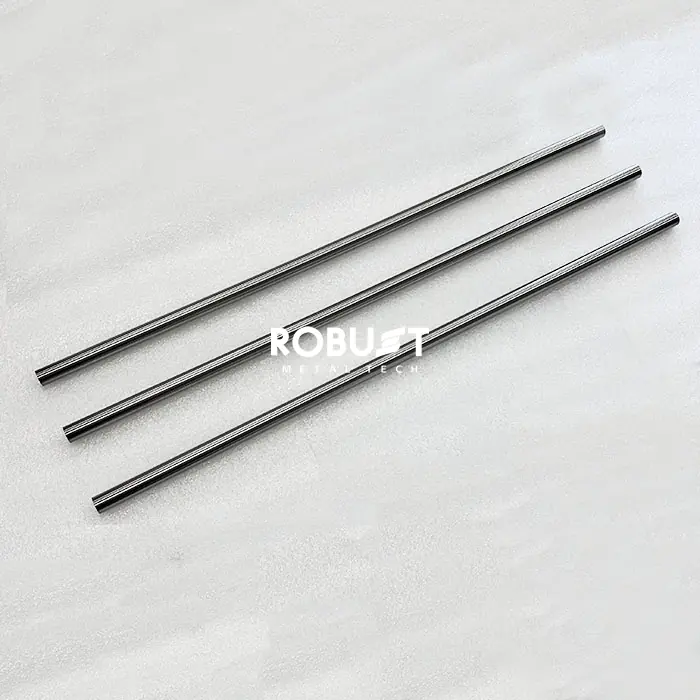
Unground Rods

Unground rods are in sintered condition with slightly oversized dimensions.

They are suitable for secondary machining and cost-sensitive applications.

Ground Rods

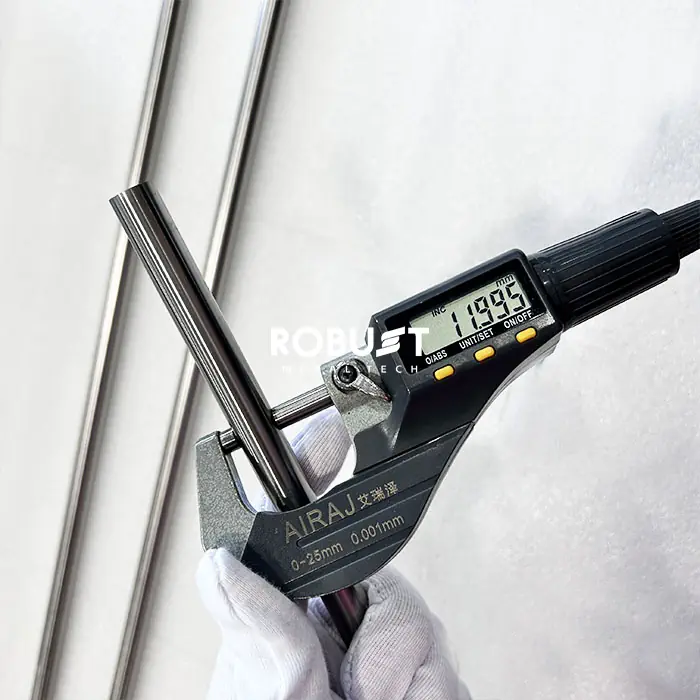
Ground rods are diamond-finished with high dimensional accuracy.

They are ready for direct use in precision CNC tool grinding systems.

6. Applications

Cemented carbide rods are widely used in CNC tool manufacturing.

They are applied in aerospace components, automotive parts, and precision mold processing.

They are also used in high-speed cutting and automated production systems.

Video

FAQs

FAQ about Cemented Carbide Rod

1. What is the difference between Unground and Ground rods?

Unground (Black): These are as-sintered condition rods.

They have a dark surface and are slightly oversized (about 0.3–0.5 mm).

They are more economical but require centerless grinding before use.

Ground (h6/h5): These rods are precision diamond-ground to tight tolerances.

They have a smooth surface and accurate diameter.

They can be directly used in CNC tool grinding and collet systems.

2. Why do some rods have twisted (helical) holes?

Helical coolant holes are designed for internal coolant supply in drill tools.

The spiral structure matches the flute angle of twist drills.

This improves chip evacuation and reduces heat during deep hole machining.

3. Can carbide rods be cut into smaller lengths?

Yes, carbide rods can be cut, but not with a standard saw.

A diamond cutoff wheel with continuous water cooling must be used.

Dry cutting may cause micro-cracks and later tool failure under load.

4. What does h6 tolerance mean?

h6 is a precision tolerance standard for ground carbide rods.

It ensures a very tight diameter range suitable for high-precision tool holders.

Example: A 10 mm h6 rod is typically between 9.991 mm and 10.000 mm.

5. What is cobalt leaching in carbide rods?

Cobalt leaching refers to binder degradation in humid or poor coolant conditions.

This can weaken the surface and cause chipping or cracking.

Proper storage and high-quality grinding fluids help prevent this issue.

6. How to choose between 6% and 12% cobalt content?

6% Cobalt: Higher hardness and better wear resistance.

Suitable for aluminum, plastics, and graphite machining.

However, it is more brittle under vibration.

10–12% Cobalt: Higher toughness and impact resistance.

Suitable for steel, stainless steel, and titanium alloys.

7. What are chamfered rods?

Chamfered rods have a beveled edge (usually 45°) on one or both ends.

This reduces edge damage during handling and transportation.

It also improves automatic loading into CNC tool systems.

8. What is the difference between sub-micron and micro-grain rods?

Micro-grain: General classification for fine grain carbide materials.

Sub-micron: Grain size below 1.0 μm with improved hardness and wear resistance.

Ultra-fine / nano grain: Used for micro tools under 1 mm diameter.

It provides sharper cutting edges and reduces tool breakage.

Reliable Cemented Carbide Rod Supplier | Tungsten Carbide Rods for CNC Cutting Tools and Industrial Use Manufacturer & Supplier in China

Robust provides high-quality Cemented Carbide Rod Supplier | Tungsten Carbide Rods for CNC Cutting Tools and Industrial Use solutions for industrial, high-temperature, and precision engineering applications worldwide.

OEM & ODM Support | Fast Delivery | Factory Direct Price

We use cookies to ensure you get the best experience on our website. Privacy Policy.