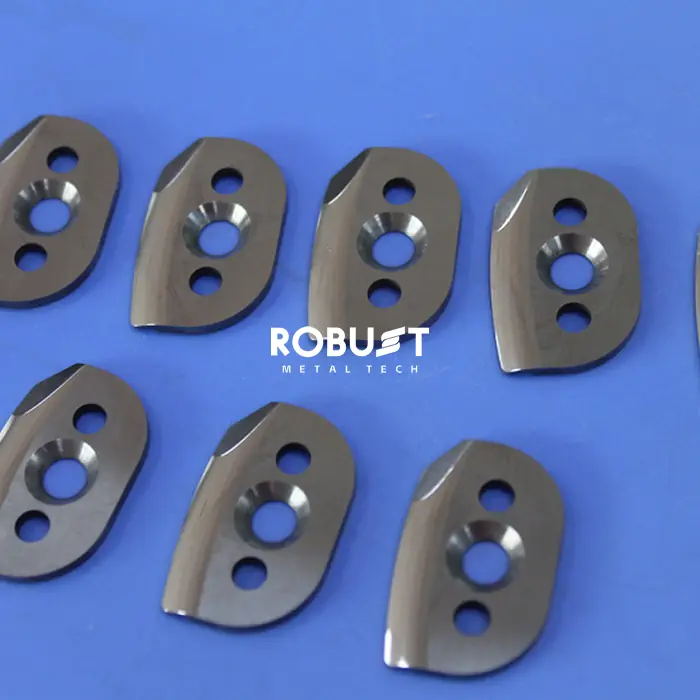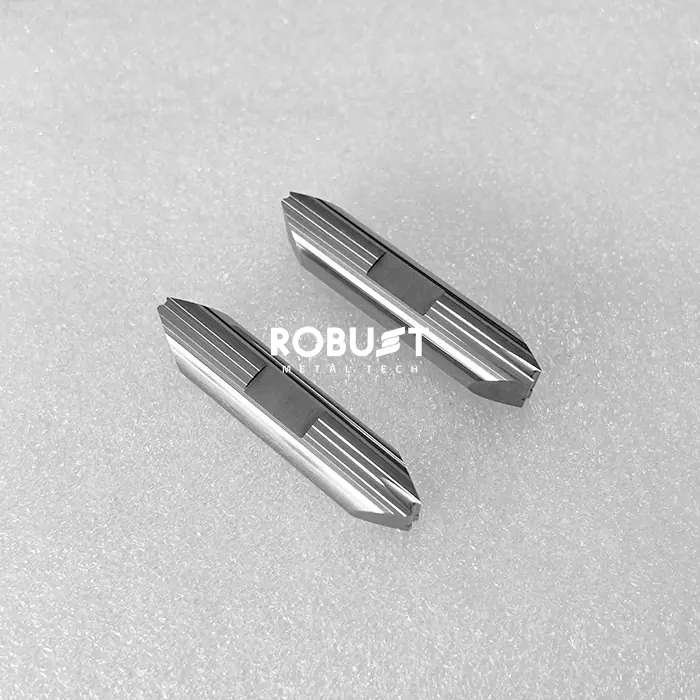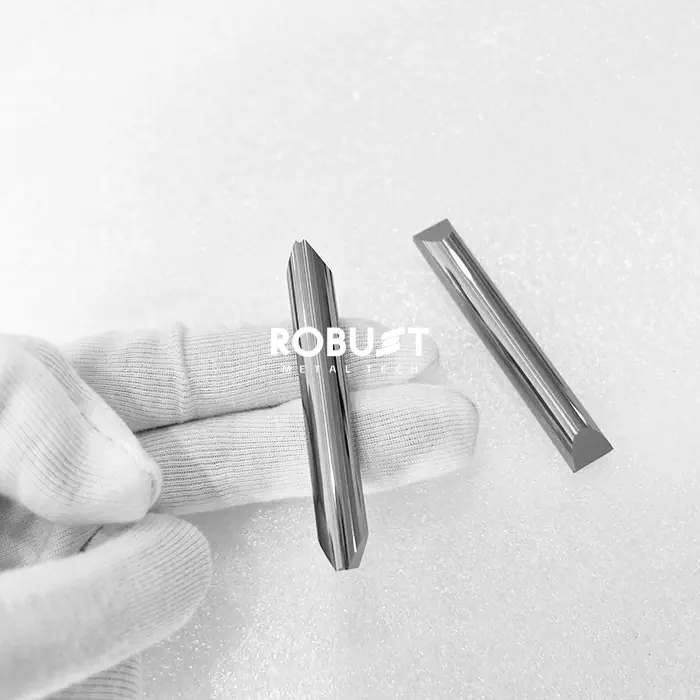
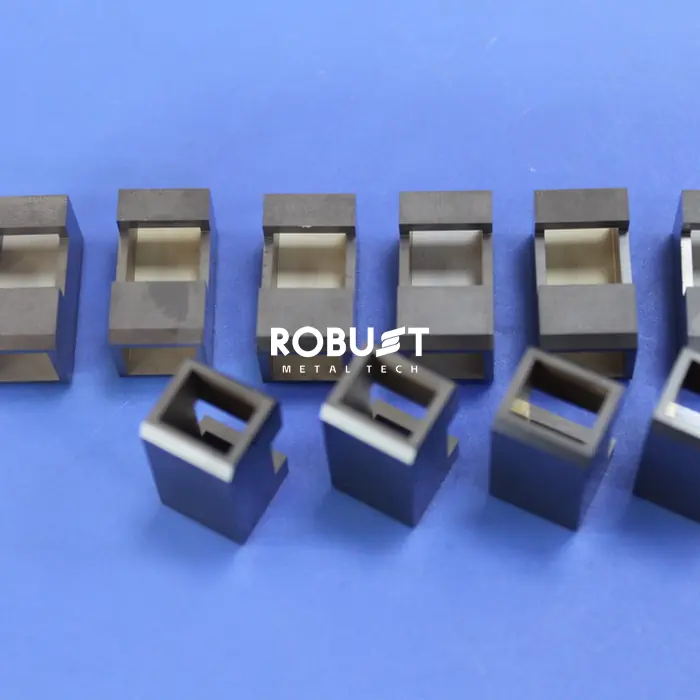
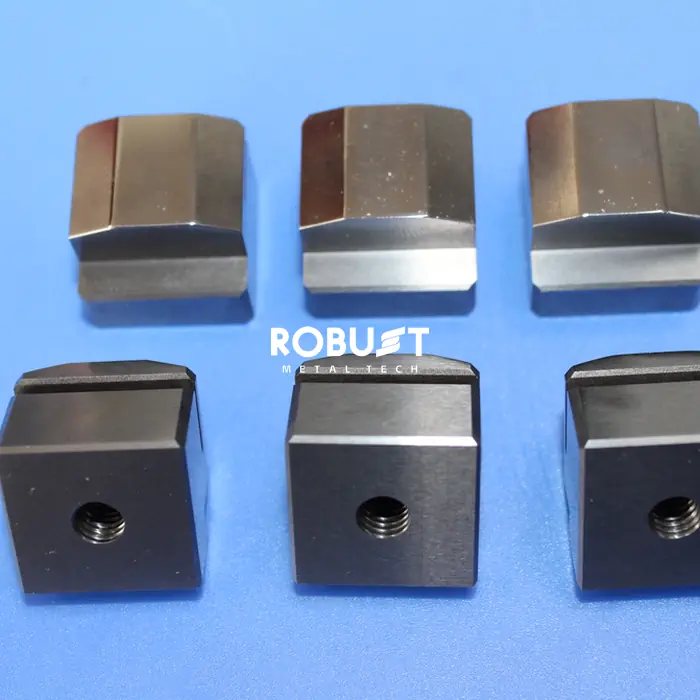
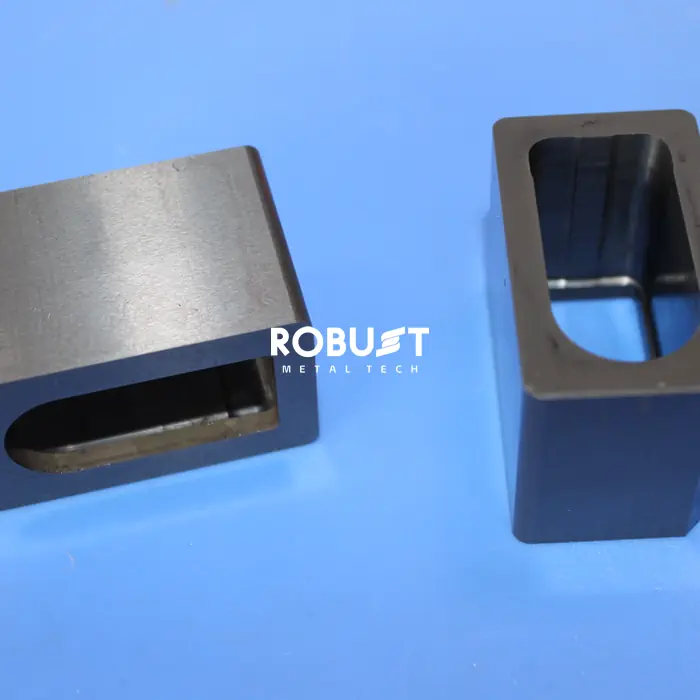
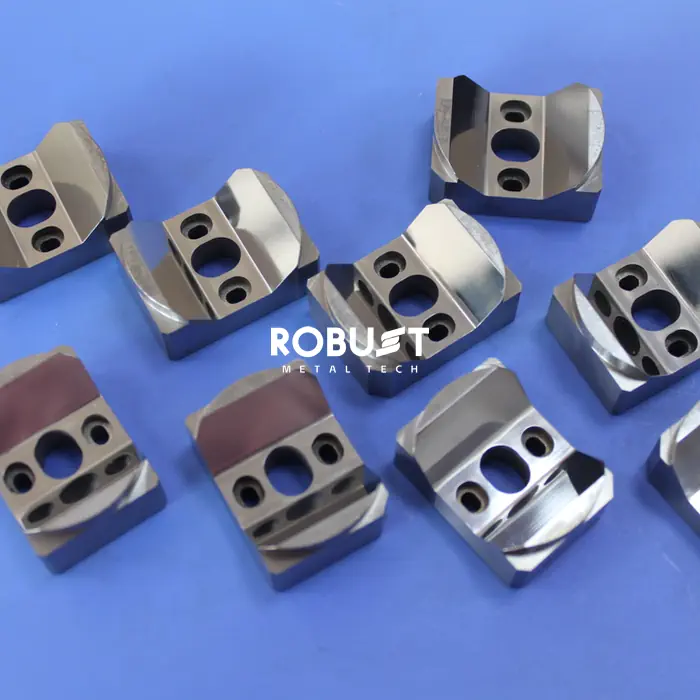
High precision tungsten carbide machined parts designed for demanding industrial environments.
Made from cemented carbide with excellent hardness, wear resistance, and thermal stability.
Suitable for cutting tools, wear parts, mining, drilling,
and precision forming applications requiring long service life and dimensional accuracy under high stress conditions.
Tungsten Carbide Machined parts, commonly known as tungsten carbide or simply carbide, is a composite material consisting of hard carbide particles (primarily tungsten carbide, WC) bonded together by a metallic binder (usually cobalt, Co).
This combination results in cutting tools that are exceptionally hard, wear-resistant, and capable of operating at high temperatures and speeds, making them the industry standard for most metal cutting applications.
In industrial manufacturing, Cemented Carbide parts (often called "Hard Metal") are high-performance components engineered for environments where steel would fail.
They are metal matrix composites consisting of hard carbide grains (usually Tungsten Carbide) "cemented" together by a metallic binder (usually Cobalt).
Extreme Hardness: It ranks between 9 and 9.5 on the Mohs scale, just below diamond. This makes it incredibly resistant to wear and deformation.
High Density: It is significantly heavier than steel, providing stability in high-speed applications.
Thermal Stability: It maintains its hardness even at temperatures up to 700°C to 1000°C, where high-speed steel would soften.
Compression Strength: It has a very high resistance to being crushed, though it is more brittle than steel when subjected to heavy impacts.
Part Category | Specific Examples | Why Carbide? |
Cutting Tools | CNC Inserts, End mills, Drill bits, Saw blades | Stays sharp longer than steel; allows for faster cutting speeds. |
Wear Parts | Nozzles, Seals, Bushings, Valvetrains | Resists erosion from high-pressure fluids or abrasive slurries. |
Mining/Drilling | Rock bits, DTH buttons, Road milling teeth | Can crush through granite and concrete without wearing down. |
Forming Dies | Wire drawing dies, Cold heading dies | Holds precise dimensions under massive pressure. |
In common conversation, they are used interchangeably. Technically, Tungsten Carbide (WC) is the raw chemical compound (the hard gray powder).
Cemented Carbide is the finished material—the result of "cementing" those hard WC grains together with a metallic binder like Cobalt.
You cannot make a solid part out of pure WC powder; it requires the binder to hold it together.
Chipping is the most common failure for carbide. Because the material is so hard, it is also brittle.
Chipping is usually caused by:
Interrupted Cuts: If the part is hitting a gap or an uneven surface.
Machine Vibration: Lack of rigidity in the setup.
Thermal Shock: Rapidly heating and cooling the part (e.g., inconsistent coolant flow).
Wrong Grade: You may be using a grade that is too hard and lacks the toughness (Cobalt content) needed for the job.
No, you cannot weld it in the traditional sense. The high heat of welding will cause the carbide to crack (thermal shock).
Brazing: This is the standard method. Use a silver-based filler metal to "glue" the carbide to a steel shank.
Mechanical Fastening: Using screws or clamps (common in CNC inserts).
Adhesives: High-strength epoxies are used for low-heat wear applications.
Standard steel grinding wheels (aluminum oxide) will not work—the carbide will simply grind the wheel away.
You must use:
Diamond Wheels: The only material significantly harder than carbide.
Green Silicon Carbide Wheels: A cheaper but less precise alternative for rough grinding.
EDM (Electrical Discharge Machining): Uses electrical sparks to erode the material, ideal for complex internal shapes.
Tungsten Carbide itself is very resistant to oxidation.
However, the binder (Cobalt) can be susceptible to corrosion if exposed to certain chemicals or acidic coolants.
Solution: For high-moisture or chemical environments, manufacturers often use a Nickel binder instead of Cobalt, which provides much better corrosion resistance.
Sub-micron/Fine Grains: Provide a very sharp edge and high hardness. Best for precision cutting tools and surgical instruments.
Coarse Grains: Provide better resistance to thermal fatigue and heavy impact. Best for mining, rock drilling, and heavy-duty crushing.
Yes. Carbide recycling is a massive industry.
Because Tungsten is a rare and expensive metal, scrap carbide is worth significantly more than steel scrap.
Most manufacturers collect dull or broken inserts to be chemically processed back into raw powder.
HRC (Rockwell C): Used for steels. Most steels top out around 60–65 HRC.
HRA (Rockwell A): Used for carbide. Because carbide is so hard, HRC testing is not suitable.
HRA uses a lighter load to measure extreme hardness levels (typically 85–93 HRA).
Robust provides high-quality Tungsten Carbide Machined Parts Supplier | High Precision Carbide Components for Industrial Use solutions for industrial, high-temperature, and precision engineering applications worldwide.
OEM & ODM Support | Fast Delivery | Factory Direct Price