
 View Product ↗
01
Product Description
Technical details, material information and manufacturing notes for this product.
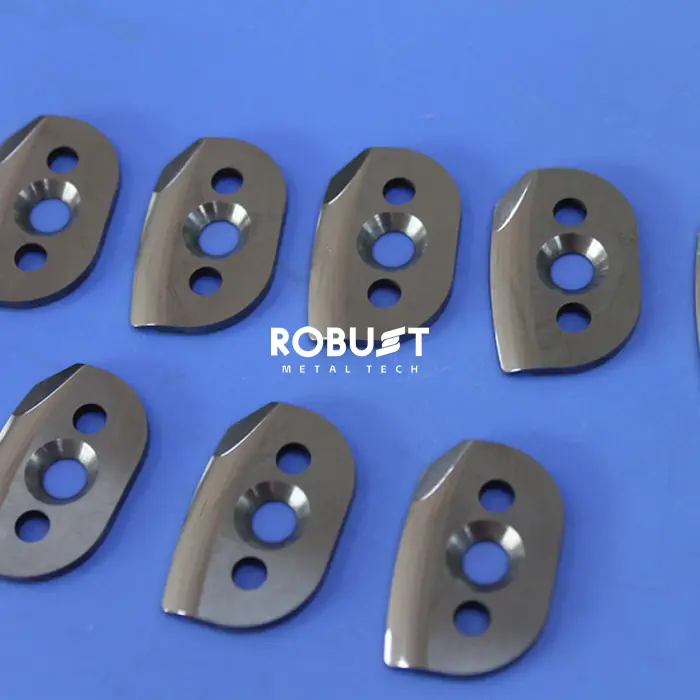
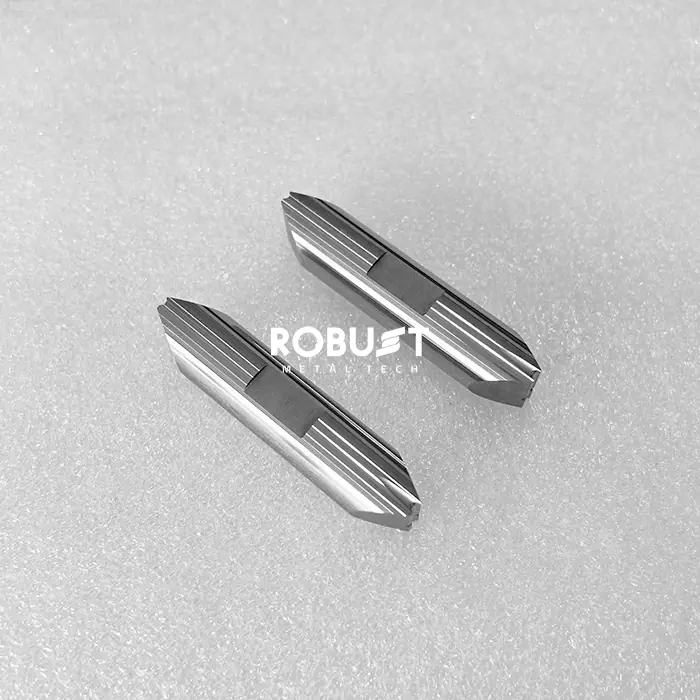
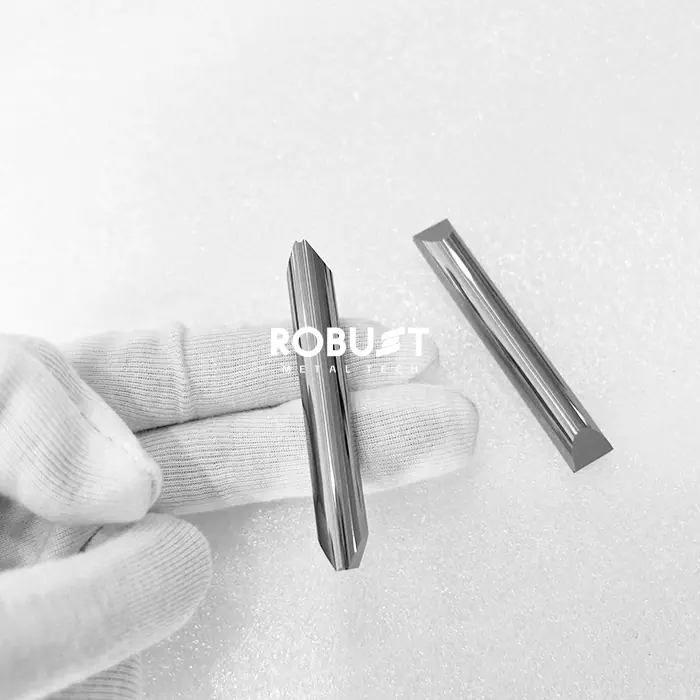
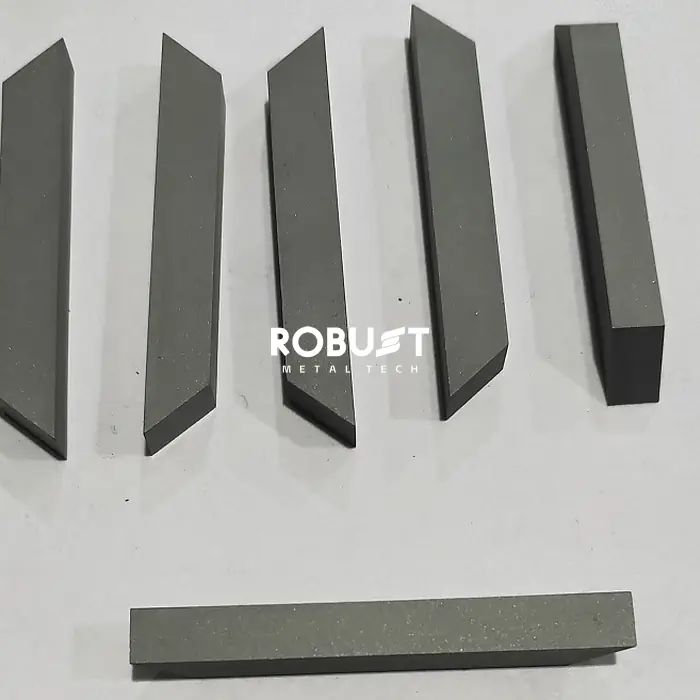
1. Overview of Carbide Inserts
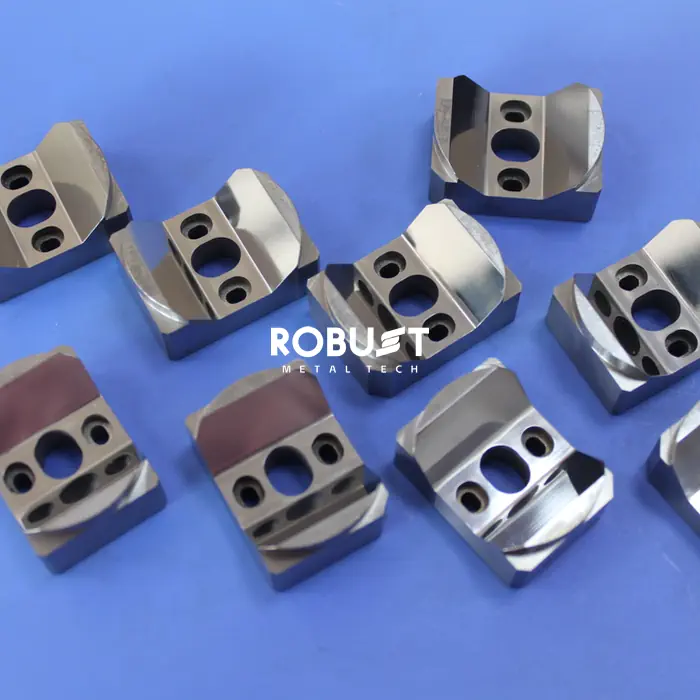
Carbide inserts are also known as tungsten carbide cutting tools.
They are a composite material made from tungsten carbide (WC) particles and a metallic binder such as cobalt (Co).
This structure delivers a balance of hardness, toughness, and heat resistance.
Cemented Carbide Blade is a high-performance cutting tool made from a metal matrix composite.
It is a pseudo-alloy produced by powder metallurgy.
Hard ceramic particles are cemented together by a metallic binder.
2. Key Properties of Carbide Inserts
Extreme Hardness
It ranks just below diamond on the Mohs scale.
This allows the cutting edge to maintain sharpness much longer than HSS tools.
Thermal Stability
Carbide inserts can withstand high cutting temperatures without losing strength.
They are suitable for high-speed machining operations.
Wear Resistance
Ideal for abrasive materials such as fiberglass, MDF, and reinforced plastics.
They offer long tool life and stable performance.
3. Applications of Carbide Inserts
| Type | Usage | Benefits |
| Circular Saw Blades | Cutting hardwoods, laminates, non-ferrous metals | Clean cuts, reduced sharpening frequency |
| Industrial Knives | Paper slitting, textile cutting, packaging | Reduced downtime and longer service life |
| Scraper Blades | Removing glue, paint, rust | High durability on hard surfaces |
| Milling Inserts | CNC machining and heavy metal cutting | High-speed material removal capability |
4. Key Properties Summary
Extreme Hardness
Ranks just below diamond on the hardness scale.
Maintains cutting edge sharpness longer than high-speed steel.
Thermal Stability
Withstands high temperatures generated during machining.
Prevents tool softening at high cutting speeds.
Wear Resistance
Suitable for abrasive and reinforced materials.
Ensures stable performance under continuous operation.
5. Application Performance Overview
| Type | Usage | Benefits |
| Circular Saw Blades | Hardwood, laminates, non-ferrous metals cutting | Clean cutting performance, long edge life |
| Industrial Knives | Paper, textile, packaging industries | Reduced blade change frequency |
| Scraper Blades | Surface cleaning and material removal | High resistance to dulling |
| Milling Inserts | Heavy-duty CNC machining | High efficiency metal removal |
04
Related Technical Resources
Material guides, application notes and manufacturing knowledge from ROBUST.
05