Titanium Rods Grades, Types, Properties and Applications for CNC Machining and Medical Use
-
1. Exceptional corrosion resistance in harsh environments (seawater, acids, chlorides)
2. High strength-to-weight ratio, lightweight yet durable
3. Excellent machinability and weldability for easy processing
4. Stability up to 1,650°C, though practical structural use is usually capped at 500°C.
5. Superior biocompatibility, safe for medical and food-related applications
Description
Titanium Rods Overview
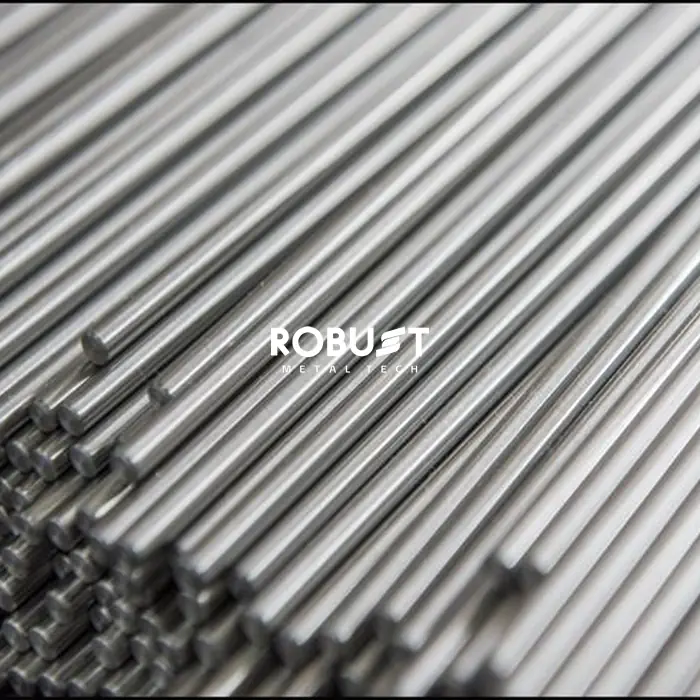
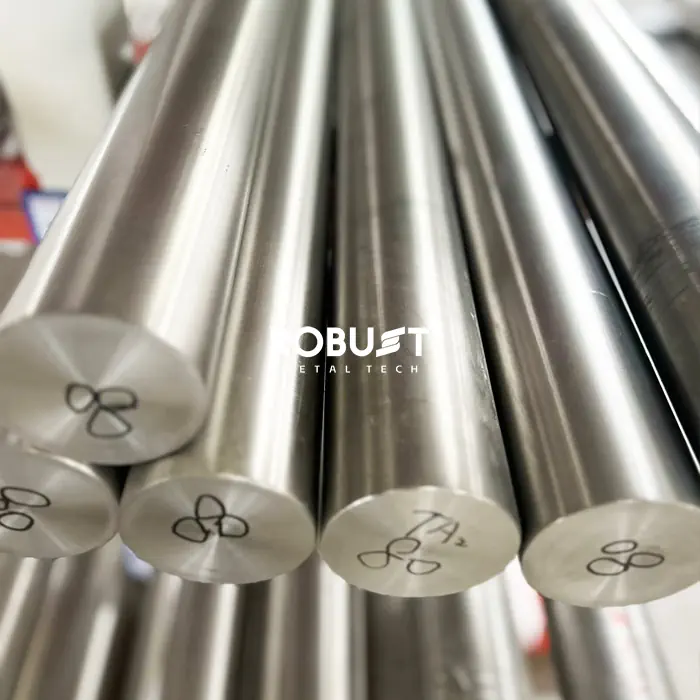
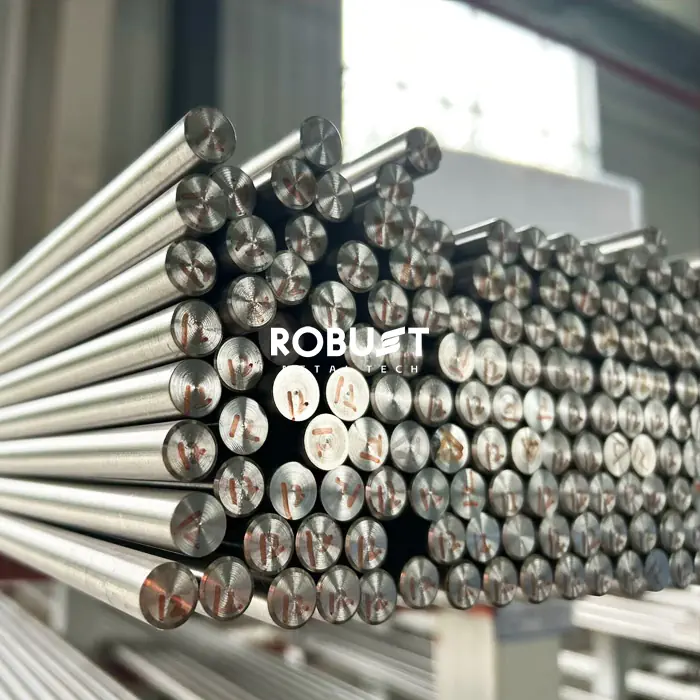
Titanium rod is one of the most versatile titanium product forms.
It is widely used in CNC machining, fasteners, and medical implant manufacturing.
Compared with titanium plates and tubes, rods are designed for structural strength and torque resistance.
Titanium rods provide a unique combination of high strength and low weight.
This makes them an ideal replacement for traditional steel materials in demanding industries.
They are commonly produced through hot rolling, forging, and centerless grinding processes.
Types of Titanium Rods
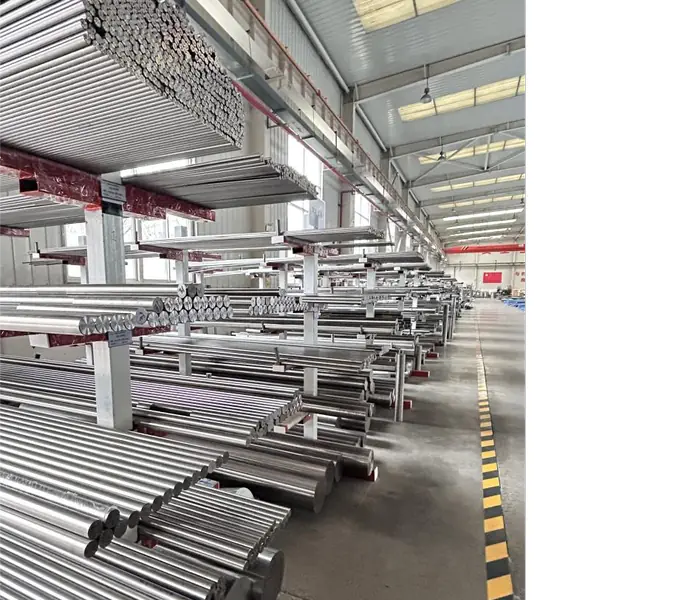
Titanium rods are available in several geometric forms depending on machining and engineering requirements.
Round Bar
Round bars are the most commonly used titanium rod form.
They are widely applied in CNC machining and shaft production.
Hexagonal Bar
Hexagonal bars are commonly used for bolts, nuts, and mechanical fittings.
The flat surfaces allow easy wrench tightening during assembly.
Square and Rectangular Bar
These bars are used in structural components and block-machined parts.
They provide stability in load-bearing applications.
Surface Finishes
Black / Hot Rolled: This finish comes directly from the mill.
It is typically used when the surface will be fully machined later.
Peeled / Ground: The outer layer is removed for precision sizing.
This finish provides smooth surfaces and tight dimensional tolerances.
1. Common Grades & Specifications
Titanium rods are manufactured according to international standards such as ASTM B348 and ASTM F136.
| Grade | Strength Level | Common Applications |
| Grade 2 | Moderate | Chemical equipment, marine shafts, jewelry |
| Grade 5 (Ti-6Al-4V) | Very High | Aerospace fasteners, turbines, sports equipment |
| Grade 23 (ELI) | Very High | Medical implants, bone screws, dental applications |
2. Available Product Forms & Dimensions
Titanium rods are supplied in standard lengths and precision-cut sizes.
They are widely used in high-precision machining industries.
| Product Form | Diameter Range | Typical Length | Common Finish |
| Fine Wire / Rod | 1 mm – 5 mm | Coiled or 1000 mm | Bright / Polished |
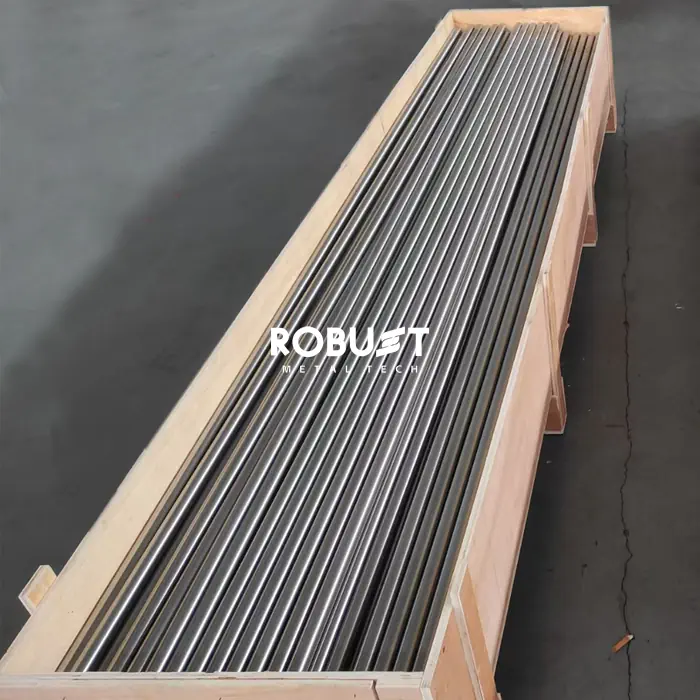
| Small Diameter Rod | 5 mm – 20 mm | 2500 mm – 3000 mm | Centerless Ground (h8/h9) |
| Standard Bar | 20 mm – 100 mm | 3000 mm – 6000 mm | Peeled / Polished |
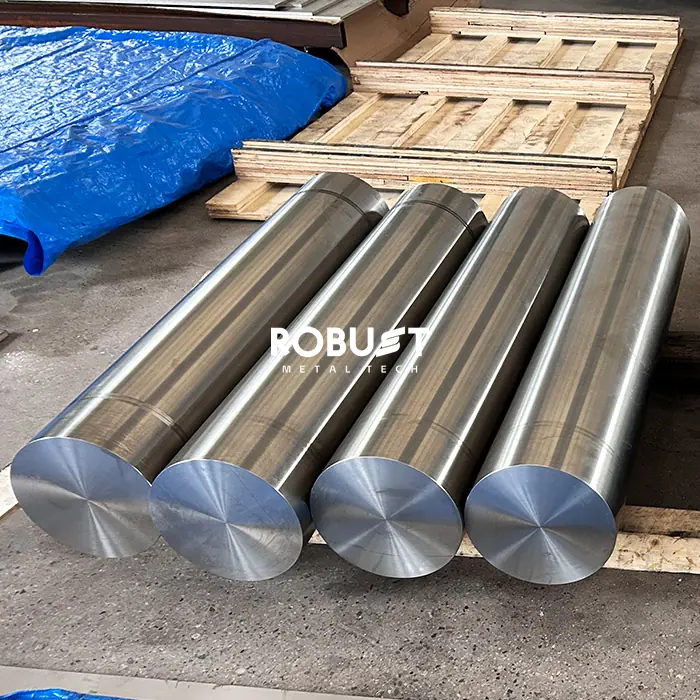
| Heavy Forged Bar | 100 mm – 400 mm | Custom Order | Rough Turned / Forged Black |
3. Mechanical Properties of Titanium Rods
Titanium rod properties are generally higher than plate materials.
This is due to the deformation strengthening during rolling and forging processes.
| Grade | Density (g/cm³) | Hardness (HRC) | Tensile Strength (MPa) | Yield Strength (MPa) |
| Grade 2 | 4.51 | ~20 HRC | 345 | 275 |
| Grade 5 (Ti-6Al-4V) | 4.43 | 32–36 HRC | 895 | 828 |
| Grade 23 (ELI) | 4.43 | 30–34 HRC | 860 | 795 |
Video
Image Gallery
FAQs
1. "What is the standard tolerance for your titanium rods?"
The Answer: For standard stock, it is usually h10 or h11. However, for CNC Swiss machining, buyers typically require h9 or h8 centerless ground tolerances to ensure the rod fits perfectly through the machine's guide bushing.
2. "Is the rod 'Stress Relieved'?"
The Answer: Titanium has high internal residual stress from the rolling process. Quality suppliers provide Annealed rods. If not annealed, the rod may "bow" or warp as soon as you start removing material on a lathe.
3. "How can I tell the difference between Grade 2 and Grade 5 rods visually?"
The Answer: You can't. They look identical. However, a spark test is a quick (though destructive) way to tell: Grade 2 produces shorter, white sparks; Grade 5 produces longer, more branched sparks. Always rely on the Mill Test Report (MTR).
4. "Can you provide 'Medical Grade' surface finish?"
The Answer: Yes. For dental and orthopedic use, rods often require an R.A. 0.8 or better surface finish. We can also provide "Raided" or "Etched" surfaces if the rod is intended for bone integration.
5. "What is the 'Straightness' requirement?"
The Answer: For high-speed machining, straightness is critical to prevent vibration. The industry standard is typically 0.3 mm per 1000 mm, but high-precision rods can be straightened to 0.1 mm per 1000 mm.
Literature
Reliable Titanium Rods Grades, Types, Properties and Applications for CNC Machining and Medical Use Manufacturer & Supplier in China
Robust provides high-quality Titanium Rods Grades, Types, Properties and Applications for CNC Machining and Medical Use solutions for industrial, high-temperature, and precision engineering applications worldwide.
OEM & ODM Support | Fast Delivery | Factory Direct Price