Hit enter to search or ESC to close

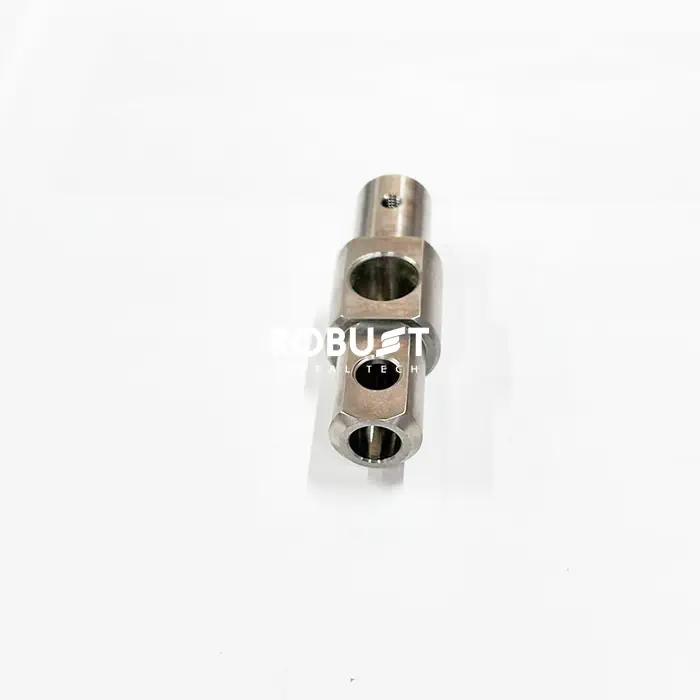
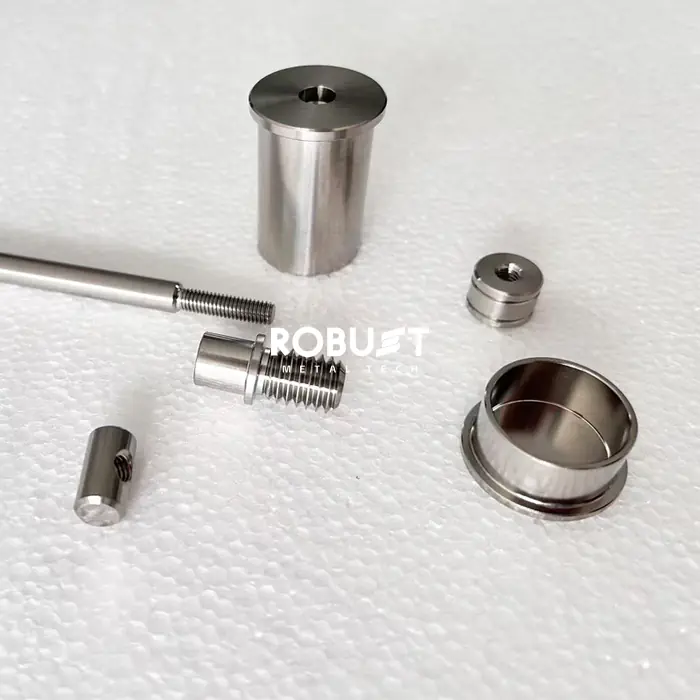
  • CNC Machining Titanium Parts for Aerospace, Medical Implants and Industrial Applications-1-ROBUST
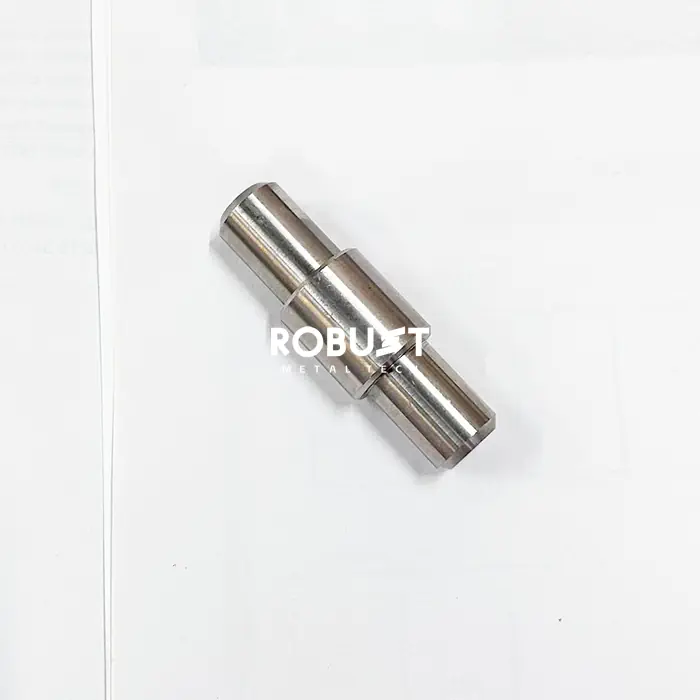
  • CNC Machining Titanium Parts for Aerospace, Medical Implants and Industrial Applications-2-ROBUST
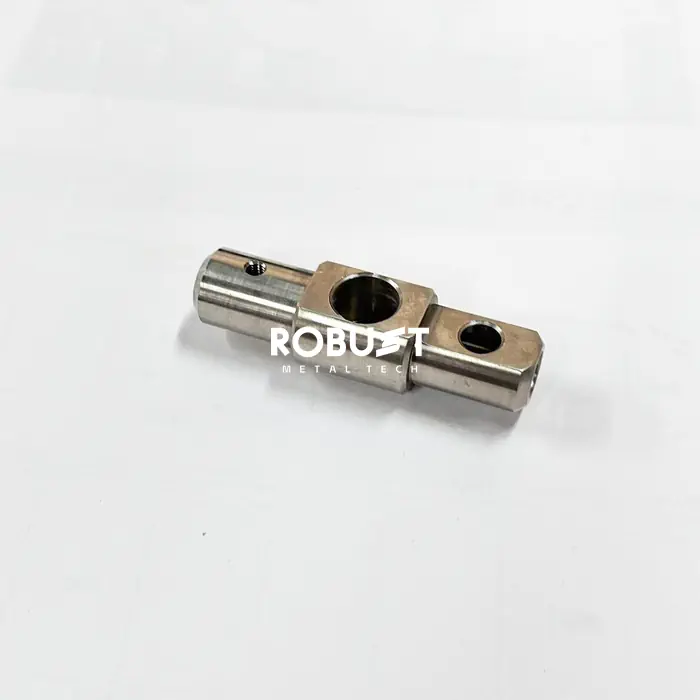
  • CNC Machining Titanium Parts for Aerospace, Medical Implants and Industrial Applications-3-ROBUST
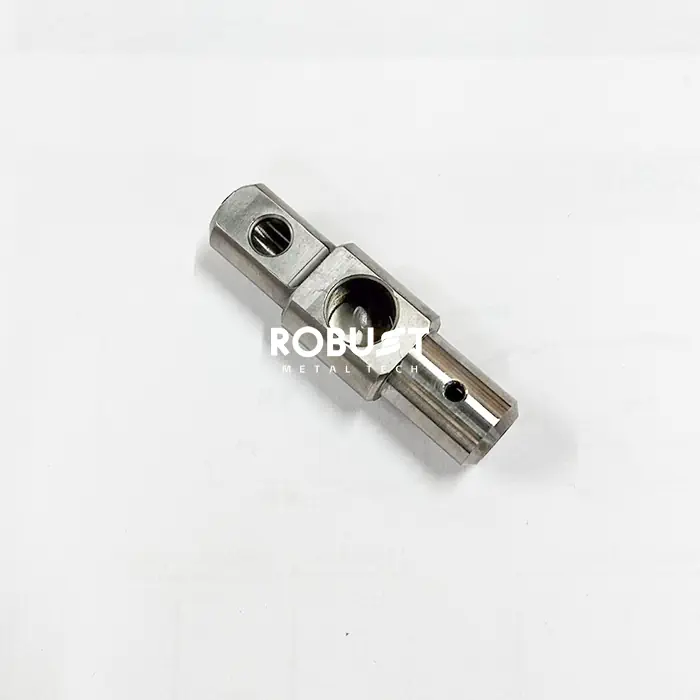
  • CNC Machining Titanium Parts for Aerospace, Medical Implants and Industrial Applications-4-ROBUST
  • CNC Machining Titanium Parts for Aerospace, Medical Implants and Industrial Applications-5-ROBUST
  • CNC Machining Titanium Parts for Aerospace, Medical Implants and Industrial Applications-6-ROBUST
CNC Machining Titanium Parts for Aerospace, Medical Implants and Industrial Applications-1-ROBUSTCNC Machining Titanium Parts for Aerospace, Medical Implants and Industrial Applications-2-ROBUSTCNC Machining Titanium Parts for Aerospace, Medical Implants and Industrial Applications-3-ROBUSTCNC Machining Titanium Parts for Aerospace, Medical Implants and Industrial Applications-4-ROBUSTCNC Machining Titanium Parts for Aerospace, Medical Implants and Industrial Applications-5-ROBUSTCNC Machining Titanium Parts for Aerospace, Medical Implants and Industrial Applications-6-ROBUST

CNC Machining Titanium Parts for Aerospace, Medical Implants and Industrial Applications

5out of5 based on22 reviews | Write a review
  • 1.Extreme Dimensional Stability: Titanium maintains its shape and tolerances even under significant thermal stress.

    2.Complex Geometries: Advanced 5-axis CNC machining allows for "organic" shapes used in aerospace bulkheads and medical implants.

    3.Superior Surface Integrity: Can be finished to extremely low roughness ($Ra$) values, essential for high-vacuum seals and bearing surfaces.

    4.Strength at Temperature: Unlike aluminum, machined titanium parts retain their structural integrity at temperatures up to 500°C.

    5.Corrosion-Free Precision: Ideal for "set-and-forget" components in subsea or chemical environments where maintenance is impossible.

Description

1. Primary Machining Technologies

The choice of process depends on the part's symmetry and complexity.

Process

Best For

Capabilities

CNC Turning

Cylindrical parts, shafts, bushings

High-speed rotation, excellent concentricity

CNC Milling

Prismatic parts, housings, brackets

5-axis movement for complex 3D contours

Wire EDM

Ultra-thin slots, sharp internal corners

Stress-free cutting of hardened titanium

Swiss Machining

Micro-parts (screws, pins)

High-volume, small diameter precision


2. Select the Right Grade

Grade

Type

Characteristics

Best For

Grade 2

Commercially Pure

Highly ductile, excellent corrosion resistance.

Chemical processing, marine parts.

Grade 5

Ti-6Al-4V

The "workhorse." High strength, heat treatable.

Aerospace, medical implants, racing.

3. Design for Manufacturability (DFM)

Machining titanium is more expensive than steel or aluminum; smart design can significantly lower costs.

Avoid Deep Pockets: Tools can vibrate (chatter) in deep cavities. Keep depth-to-width ratios below 4:1.

Large Internal Radii: Tiny corner radii require small, fragile tools that break easily in titanium. Use the largest possible radius.

Thread Depth: Titanium is so strong that threads deeper than 2x the diameter add little strength but significantly increase the risk of tap breakage.

Wall Thickness: Maintain a minimum wall thickness of 0.5 mm to prevent the part from warping due to machining heat.
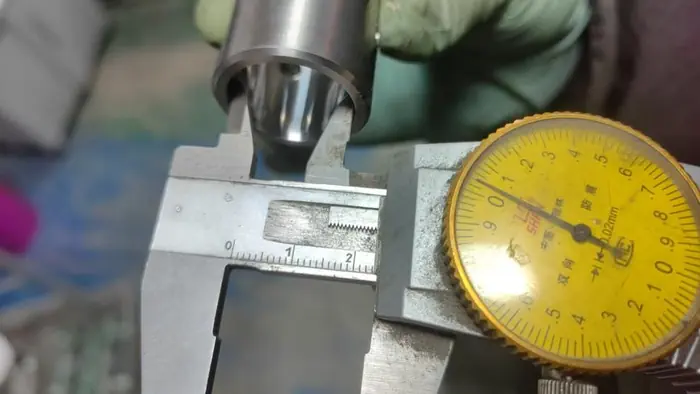
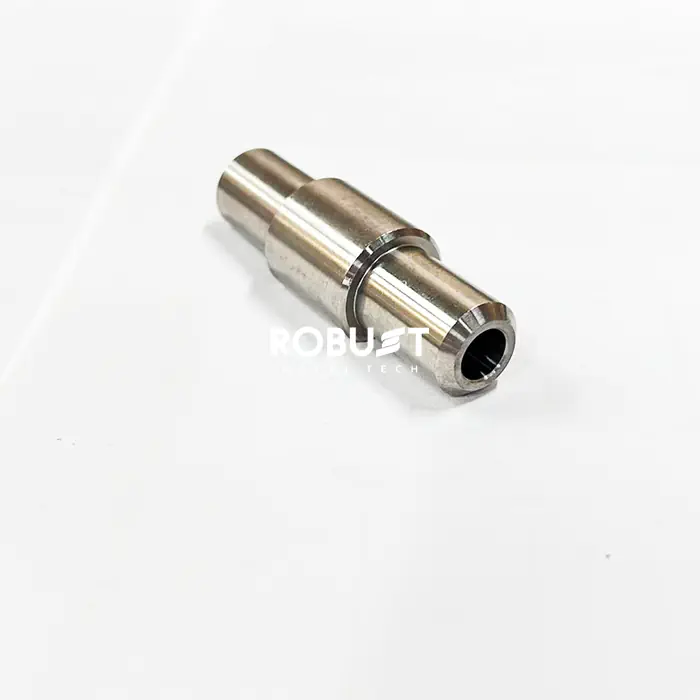
Custom-Titanium-Parts.webp

4. Surface Finishing Options

Post-machining treatments enhance both the performance and the appearance of the part.

Anodizing (Type II & III): Increases wear resistance and provides color coding (Type II) or a thick, protective grey oxide layer (Type III).

Passivation: A chemical treatment that maximizes the natural protective oxide layer for medical or high-purity use.

Bead Blasting: Provides a uniform, matte "satin" finish and hides tool marks.

Electropolishing: Removes microscopic surface peaks to create a mirror-like, ultra-clean surface.

PVD Coating: (Physical Vapor Deposition) Adds an ultra-hard layer (like TiN) to increase surface hardness and reduce friction.

Video

FAQs

1. "Why is titanium more expensive to machine than stainless steel?"

The Answer: Titanium has low thermal conductivity, meaning heat doesn't leave with the "chip"—it stays at the tool's edge. This requires slower cutting speeds, specialized carbide tools, and high-pressure coolant, all of which increase machine time and tool costs.

2. "What tolerances can be achieved with titanium?"

The Answer: Standard CNC machining can achieve ±0.025 mm. With precision grinding or EDM, we can reach tolerances as tight as ±0.005 mm.

3. "Can you machine Grade 5 (Ti-6Al-4V) titanium?"

The Answer: Yes. While Grade 5 is much stronger thanGrade 2, it actually chips better (less "gummy"), making it very popular for precision machined parts despite the higher tool wear.

4. "How do you ensure there are no stress cracks in the part?"

The Answer: We use "Stress Relieving" (vacuum annealing) between machining stages if the part is highly complex. Additionally, Dye Penetrant Inspection (DPI) is used to verify the surface is free of microscopic defects after machining.

5. "Is there a minimum order quantity (MOQ) for custom parts?"

The Answer: We handle everything from Prototyping (1-10 pcs) to Series Production (1000+ pcs). Prototyping is often done via 5-axis milling to avoid the cost of custom jigs or molds.


Reliable CNC Machining Titanium Parts for Aerospace, Medical Implants and Industrial Applications Manufacturer & Supplier in China

Robust provides high-quality CNC Machining Titanium Parts for Aerospace, Medical Implants and Industrial Applications solutions for industrial, high-temperature, and precision engineering applications worldwide.

OEM & ODM Support | Fast Delivery | Factory Direct Price

We use cookies to ensure you get the best experience on our website. Privacy Policy.