Titanium Wire Types, Grades, Applications and Manufacturing Specifications
-
1. Excellent corrosion resistance in seawater, acids and chloride environments
2. High tensile strength with low density, lightweight and durable
3. Good formability, bendability and weldability for processing
4. Superior heat resistance and stable performance at high temperatures
5. Outstanding biocompatibility for medical and food applications
Description
Titanium Wire Overview
Titanium wire is a high-performance material widely used in industrial and consumer applications.
It is known for its excellent strength-to-weight ratio, corrosion resistance, and biocompatibility.
This makes it suitable for aerospace, medical, welding, and jewelry industries.
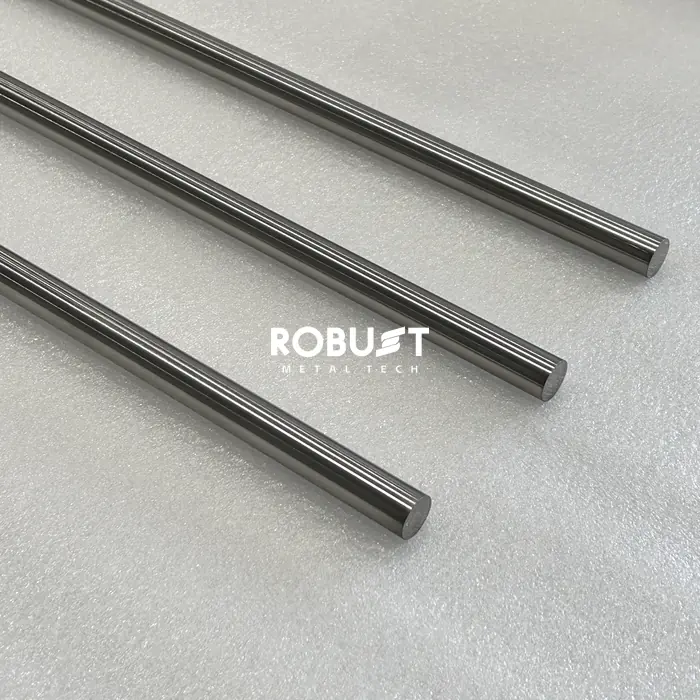
Titanium wire is produced through cold drawing processes to achieve precise diameters.
It is the finest form of titanium product used in manufacturing and fabrication.
Due to its low weight and high strength, it performs well under extreme mechanical stress.
Types of Titanium Wire
Titanium wire is available in several forms depending on application and processing requirements.
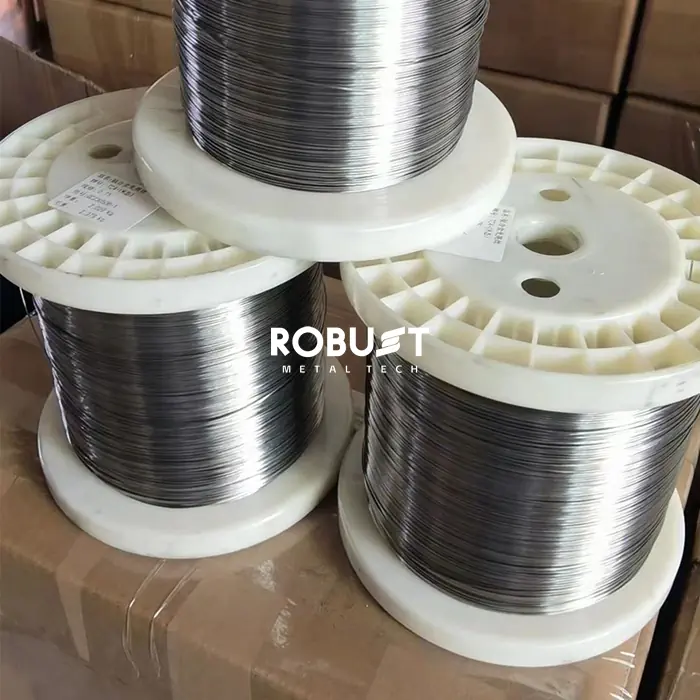
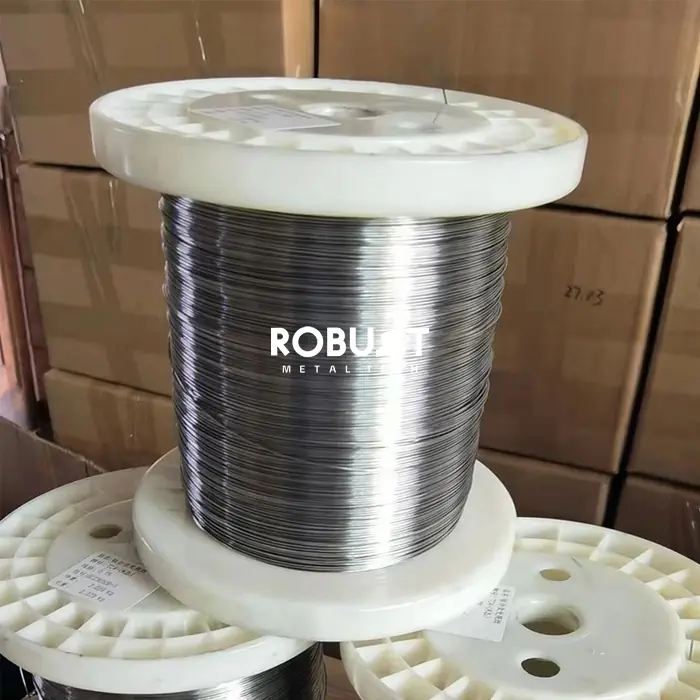
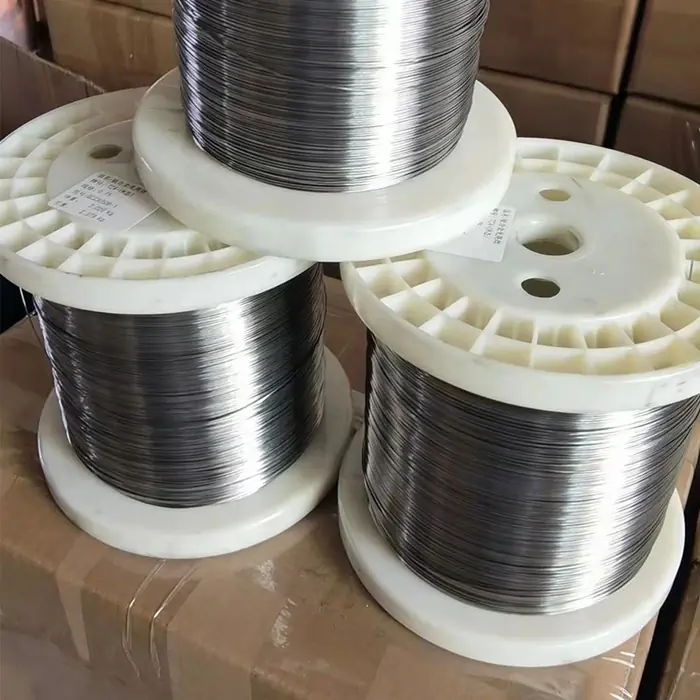
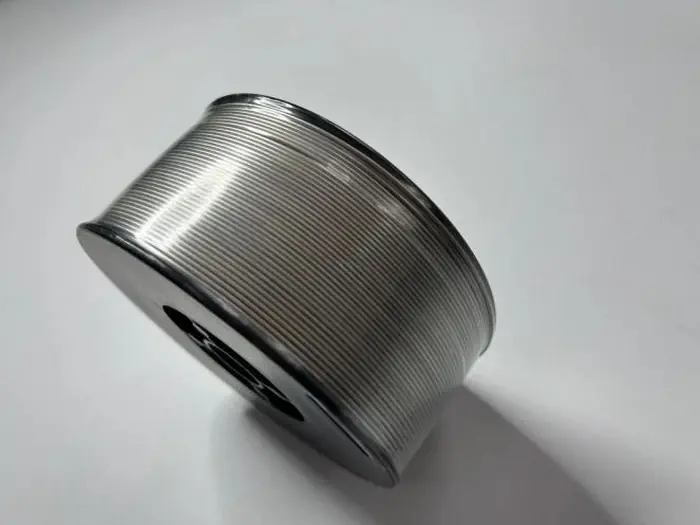
Spools
Spools are typically used for diameters under 3.0 mm.
They are commonly supplied in 1 lb, 5 lb, or 25 lb reels.
Coils
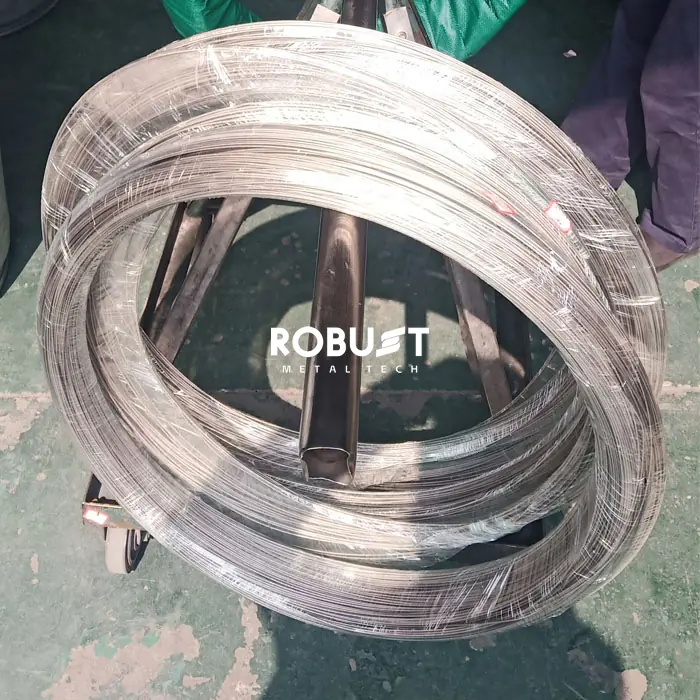
Coils are used in industrial manufacturing and spring production.
They are supplied in large loose loops for continuous processing.
Straight Lengths
Straight lengths are typically 36 inches or 1 meter long.
They are mainly used for TIG welding and medical applications.
1. Common Grades & Specifications
Titanium wire grades are selected based on structural or filler requirements.
| Grade | Classification | Specification | Primary Use Case |
| Grade 1 & 2 | CP (Pure) | ASTM B863 | Jewelry, chemical mesh, anodizing racks |
| Grade 5 | Ti-6Al-4V | ASTM B863 | High-strength springs, aerospace fasteners |
| Grade 23 | Ti-6Al-4V ELI | ASTM F136 | Surgical staples, orthopedic implants |
| ERTi-2 | Welding Wire | AWS A5.16 | TIG welding filler for CP titanium |
| ERTi-5 | Welding Wire | AWS A5.16 | TIG welding filler for Grade 5 alloy |
2. Available Product Forms & Dimensions
Titanium wire is supplied in coils, spools, or straightened cut lengths depending on usage.
It is widely used in precision welding and manufacturing industries.
| Product Form | Diameter Range | Packing Method | Surface Finish |
| Fine Wire | 0.05 mm – 0.1 mm | Plastic Spools | Bright / Diamond Drawn |
| Coiled Wire | 0.1 mm – 3.0 mm | Spools / Coils | Pickled / Polished |
| Straight Wire | 1.0 mm – 5.0 mm | 1 m Tubes (TIG) | Chemically Cleaned |
| Flat Wire | Custom Width | Spools | Rolled / Smooth |
3. Surface & Tolerance Conditions
The surface condition of titanium wire directly affects its performance.
Pickled: Acid cleaned surface with matte silver appearance.
Bright: Diamond-drawn surface with high gloss finish.
Black: Industrial surface with lubricant or oxide layer.
Chemically Cleaned: Used for welding applications to avoid contamination.
Tolerance levels typically range from ±0.02 mm to ±0.05 mm depending on diameter.
Video
Image Gallery
FAQs
1. "Can I use Grade 2 wire to weld Grade 5 plate?"
The Answer: Generally, no. You should match the filler wire to the base metal. Using Grade 2 wire on a Grade 5 plate will result in a weld that is much weaker than the surrounding material, leading to joint failure.
2. "Why is my titanium wire snapping during bending?"
The Answer: This is usually due to hydrogen embrittlement or work-hardening. If the wire was drawn too many times without vacuum annealing, it becomes brittle. Ensure you are ordering "Annealed" (Condition A) wire for any application involving tight bends.
3. "How do I achieve different colors on the wire?"
The Answer: Titanium wire is unique because it can be anodized. By submerged the wire in an electrolyte bath and applying specific voltages, you grow a transparent oxide layer. The thickness of this layer refracts light into different colors (e.g., 25V for Blue, 60V for Yellow).
4. "Is the wire 'Spring Tempered'?"
The Answer: If you are making springs or eyeglass frames, you need Cold Worked wire. If you need to weave a mesh, you need Annealed wire. Always specify the "Temper" to ensure it has the right "spring-back" for your project.
5. "What is the spooling standard?"
The Answer: For automated welding or 3D printing (DED), we use standard SD300 or BS300 spools to ensure compatibility with wire feeders. For fine jewelry wire, smaller plastic spools are standard.
Literature
Reliable Titanium Wire Types, Grades, Applications and Manufacturing Specifications Manufacturer & Supplier in China
Robust provides high-quality Titanium Wire Types, Grades, Applications and Manufacturing Specifications solutions for industrial, high-temperature, and precision engineering applications worldwide.
OEM & ODM Support | Fast Delivery | Factory Direct Price