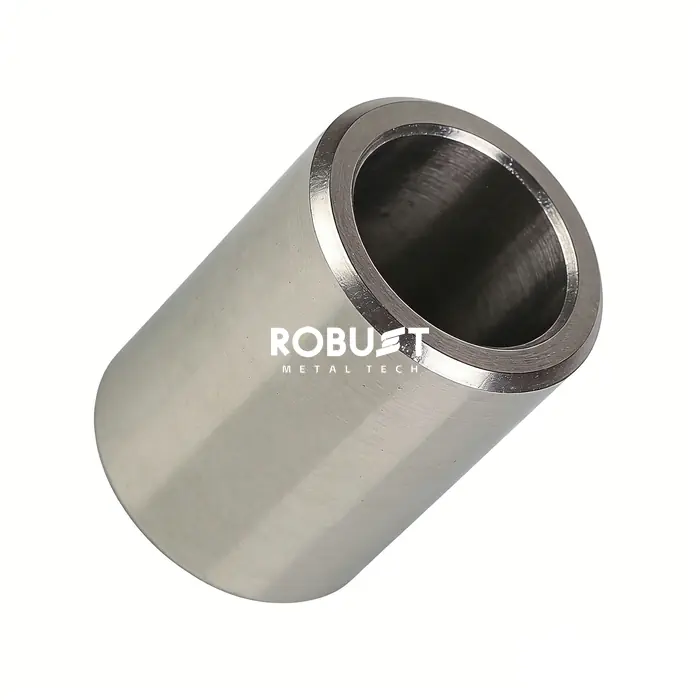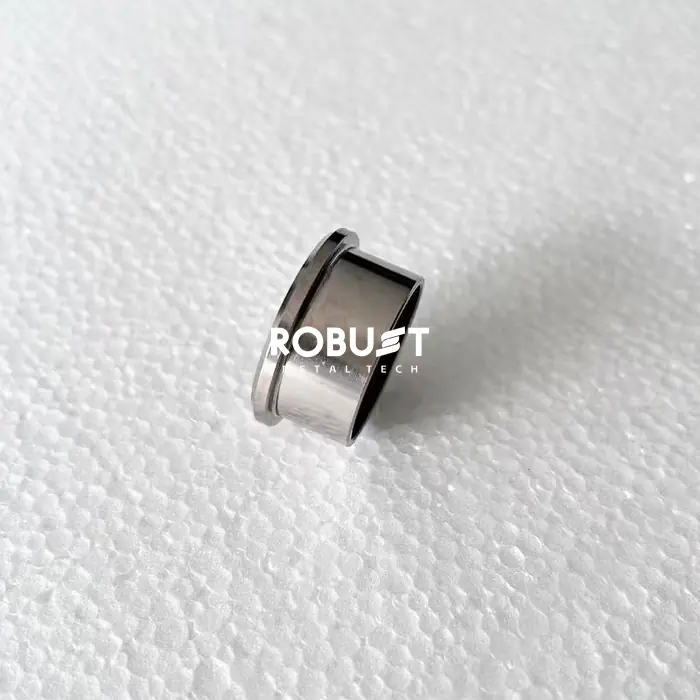
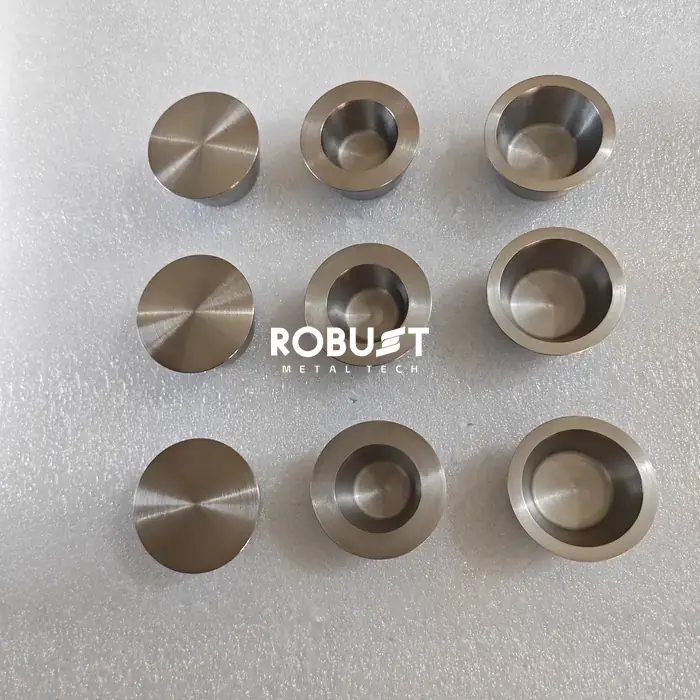
Tungsten Crucibles for High-Temperature Industrial Processing and Crystal Growth
-
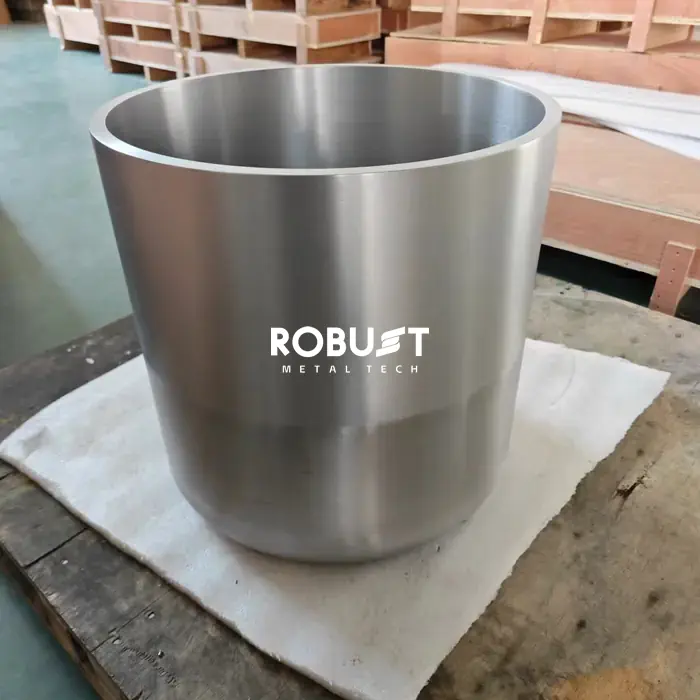
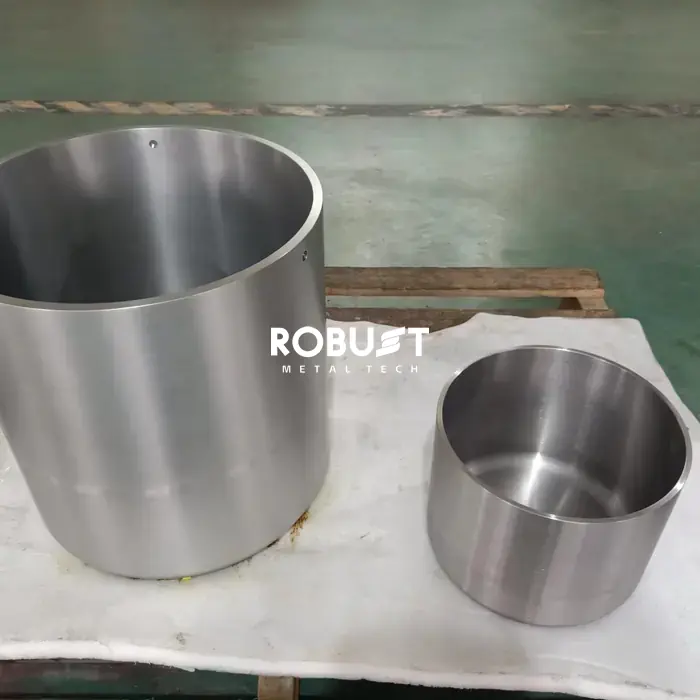
Tungsten crucibles are ultra-high-temperature containers designed for extreme thermal and chemical environments.
With a melting point of 3,422°C, tungsten enables stable operation where platinum, graphite, and ceramics fail.
They are widely used in sapphire crystal growth, rare earth metal smelting, quartz glass processing, and vacuum evaporation systems.
Different manufacturing methods such as sintered, machined, and CVD processes determine density, purity, and service life.
These crucibles are essential for industries requiring precision melting, high thermal stability, and contamination-free processing.
Description
Tungsten Crucible Overview
Tungsten crucibles are the ultimate ultra-high-temperature containers.
Because tungsten has the highest melting point of all metals (3,422°C), these crucibles are used to melt and process materials that would easily dissolve or destroy containers made of platinum, graphite, or ceramic.
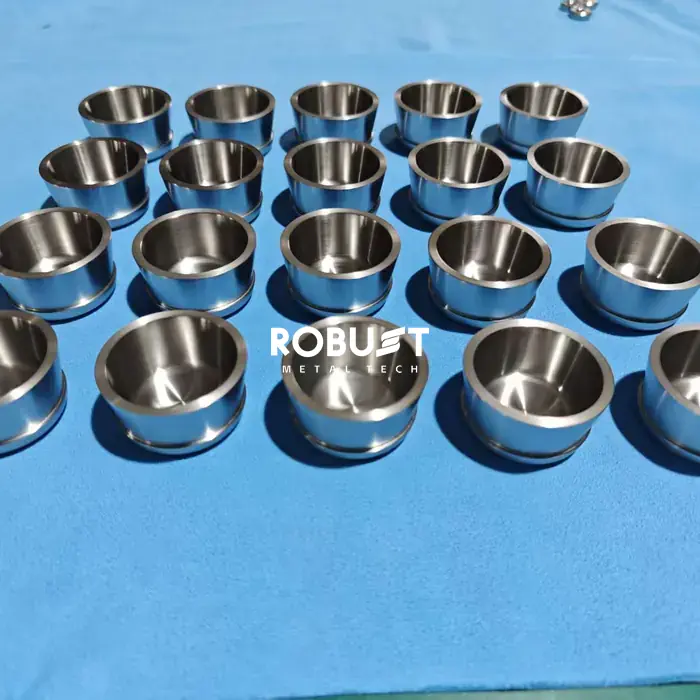
1. Primary Applications
Sapphire Crystal Growth
This is the largest global market for industrial tungsten crucibles.
In the Kyropoulos or Heat Exchanger Method (HEM), aluminum oxide (Al2O3) is melted at over 2,100°C inside a tungsten crucible to grow large, single-crystal sapphire ingots for electronics, smartphone camera lenses, and aerospace windows.
Rare Earth Metal Smelting
Used in the induction melting of high-purity rare-earth metals and oxides because tungsten has excellent resistance to chemical corrosion by these molten elements.
Quartz Glass Melting
Used in furnaces that melt silica at high temperatures to create premium quartz glass tubes and vessels.
Vacuum Evaporation / Coating
Smaller tungsten crucibles act as the thermal source container in electron-beam or thermal evaporation systems to coat optics and semiconductors.
2. Manufacturing Methods (Crucial for Buyers)
The way a tungsten crucible is manufactured entirely dictates its density, surface finish, lifespan, and price.
Buyers must choose from three distinct types:
A. Pressed & Sintered Crucibles (Most Common)
Process: High-purity tungsten powder is loaded into a mold, cold-isostatically pressed into shape, and then fired (sintered) in a high-temperature hydrogen furnace.
Density: 18.3 g/cm3 to 18.5g/cm3.
Best For: Large-scale operations like sapphire crystal growth.
They offer the best balance of cost and thermal shock resistance.
B. Machined/Forged Crucibles
Process: A solid tungsten rod or billet is forged (hammered under heat) and then machined on a lathe to hollow out the center.
Density: 19.2g/cm3 (Near perfect theoretical density).
Best For: Applications requiring extreme purity or zero porosity.
Because forging breaks down the grain structure, these crucibles have incredible mechanical strength and a perfectly smooth inner wall, making it much easier to slide out a solidified ingot.
They are significantly more expensive.
C. Chemical Vapor Deposition (CVD) Crucibles
Process: Tungsten gas is deposited atom-by-atom onto a mandrel inside a reactor.
Density: Perfect theoretical density (19.25g/cm3).
Best For: Thin-walled, high-purity micro-crucibles used in laboratory research or specialized semiconductor processes.
3. Technical Reference Table
Property | Value |
Melting Point | 3,422°C |
Density (Forged) | 9.25 g/cm3 |
Thermal Conductivity | ~174 W/(m·K) (Excellent for uniform heat distribution) |
Coefficient of Thermal Expansion | 4.5×10⁻⁶ (Very low; prevents thermal shock cracking) |
Operating Atmosphere | Vacuum or Inert Gas only (Oxidizes rapidly in air above $00°C) |
Video
FAQs
4. Frequently Asked Questions from Buyers
1. Why did my crucible crack during its first heat cycle?
This is almost always due to thermal shock caused by heating or cooling the furnace too quickly, or an un-uniform temperature gradient in the hot zone.
While tungsten handles steady heat perfectly, it is inherently brittle at room temperature (high DBTT).
Furnaces must ramp temperatures up and down slowly.
2. Can I reuse a tungsten crucible?
Yes, in applications like sapphire growth, crucibles are routinely reused for dozens of cycles.
However, the lifespan depends heavily on the extraction method.
If the ingot bonds to the wall and must be pried out aggressively, the brittle tungsten wall will fracture.
3. What is the maximum size available?
Because of powder metallurgy limits, large sintered crucibles typically max out around 500 to 700mm in diameter.
Machined/forged crucibles are limited to much smaller sizes (usually under 100mm-150 mm) due to the immense difficulty of forging massive solid tungsten billets.
Literature
Reliable Tungsten Crucibles for High-Temperature Industrial Processing and Crystal Growth Manufacturer & Supplier in China
Robust provides high-quality Tungsten Crucibles for High-Temperature Industrial Processing and Crystal Growth solutions for industrial, high-temperature, and precision engineering applications worldwide.
OEM & ODM Support | Fast Delivery | Factory Direct Price