
 View Product ↗
01
Product Description
Technical details, material information and manufacturing notes for this product.
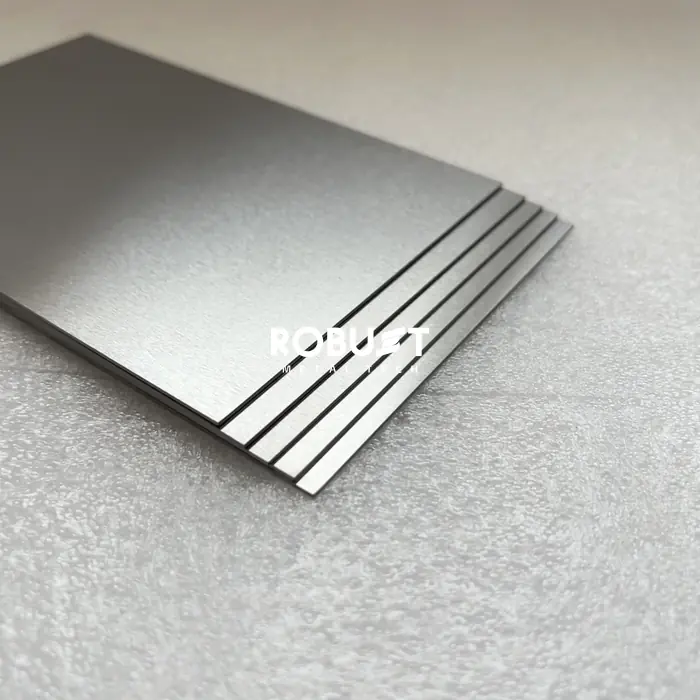
1. Product Overview of Tungsten Carbide Plate
Tungsten carbide plate is produced by powder metallurgy using high-purity tungsten carbide powder.
The material is combined with cobalt or nickel binder to improve toughness and structural stability.
It is designed for high wear environments where conventional steel cannot achieve long service life.
Main Material Features
High hardness ensures excellent resistance to abrasion and cutting wear.
High compressive strength supports heavy-load industrial applications.
Stable performance under high temperature and harsh working environments.
2. Applications of Tungsten Carbide Plate
Wear Resistant Industrial Parts
Used as liners, base plates, and protective components in mining and metallurgy equipment.
Extends service life in abrasive and high-impact environments.
Cutting and Forming Tools
Used for manufacturing cutting tools, stamping dies, drawing dies, and forming dies.
Ensures stable machining performance and long tool life.
Mechanical and Energy Industry
Applied in oil and gas, machinery, and construction industries.
Suitable for high wear and high stress working conditions.
3. Carbide Plate vs Hardened Steel (AR500)
| Feature | Tungsten Carbide Plate | Hardened Steel Plate (AR500) |
| Hardness | 89–93 HRA | ~50 HRC |
| Wear Resistance | Very high | Medium |
| Service Life | 10–50 times longer | Standard |
| Impact Resistance | Moderate | High |
| Cost | Higher initial cost | Lower initial cost |
4. Manufacturing and Processing Notes
Production Method
Tungsten carbide plates are manufactured through powder metallurgy and high-temperature sintering.
This process ensures dense structure and stable mechanical performance.
Machining Methods
Standard cutting tools cannot machine carbide plates.
Waterjet cutting and wire EDM are commonly used for precision shaping.
5. Performance Advantages
High Wear Resistance
Provides long service life in abrasive working conditions.
High Strength and Stability
Maintains structural integrity under heavy load and pressure.
Thermal Resistance
Performs well in high-temperature industrial environments.
04
Related Technical Resources
Material guides, application notes and manufacturing knowledge from ROBUST.
05